

Hosting a cheese and wine night sounds simple… until you start picking cheeses and suddenly realise half your friends hate blue cheese, someone thinks Riesling is always sweet, and you’ve got no idea what a “triple cream” even is.
Breathe. This guide isn’t about intimidating cheese snobbery or overpriced bottles. It’s about putting together a memorable night — one that’s delicious, a little bit geeky, and totally enjoyable for everyone at the table (even the ones who think they “don’t like wine”).
Let’s build the perfect cheese and wine party together — practical tips, smart pairings, and just enough flair to impress without stress.
Setting the Mood for Your Wine and Cheese Party
You don’t need to spend a fortune to make a cheese night memorable — Aldi does a decent Brie, and good presentation goes further than price. That said, if you do feel like showing off, there are a few tricks worth stealing.
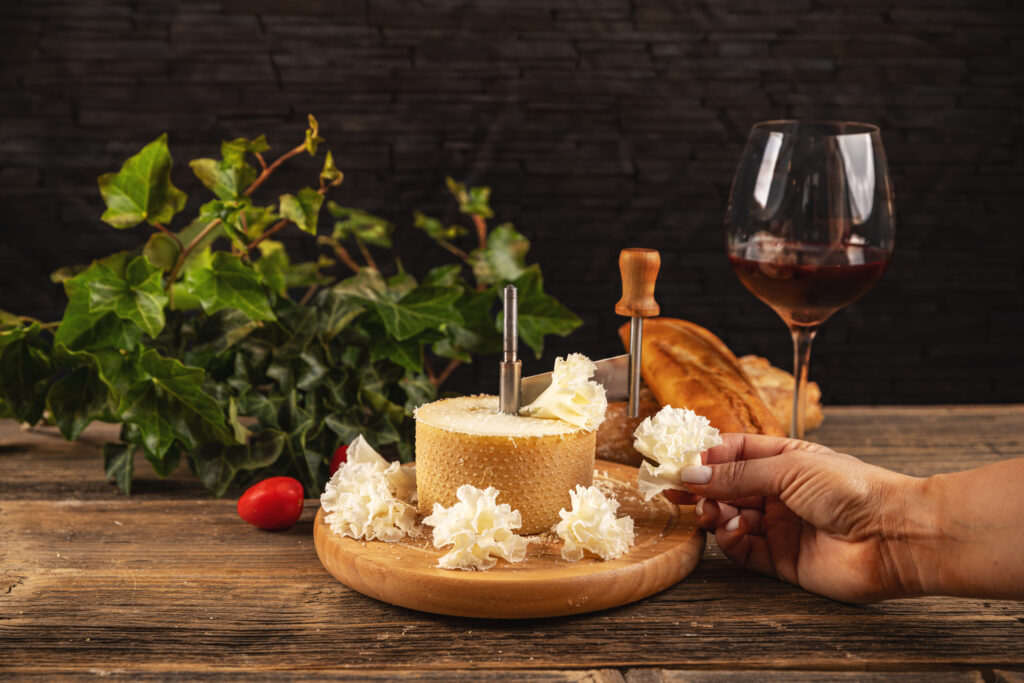
Imagine drizzling truffle honey over warm Brie, shaving Tête de Moine into delicate little rosettes with a girolle, or passing around a Stilton spoon so guests can scoop straight from the wheel. Add the right wine, and it’s theatre as much as food.
Or take the geeky route: get a curated tasting set and follow a live pairing (we run online ones at Loki with winemakers from around the world). It’s like cheese school, but with wine.
Themes can be fun too — go French with Brie and Burgundy, Spanish with Manchego and Rioja, or turn it into a world tour with a stop in each country. You could even go full fancy dress (yes, berets encouraged) or ask your friends to bring a cheese-and-wine pairing along with a little backstory about why they chose it.
How to Choose Your Cheeses
Picking the cheeses might be the most fun — or the most stressful — part of the whole process. Your safest strategy: offer variety! Here’s how to get it right.
Choose cheese by texture
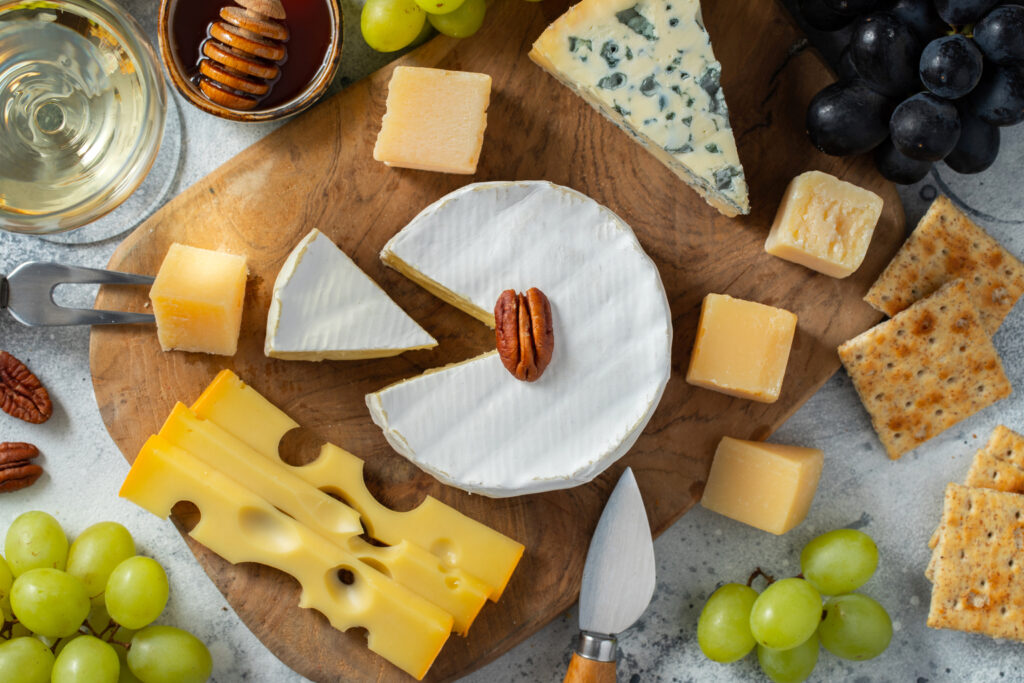
Think one soft (Brie, triple cream), one semi-soft (Taleggio, Morbier), one firm (Manchego, Comté), and one blue.
Choose by milk or flavour
Offer a variety — cow, sheep, goat, and there are mixed-milk cheeses too! Just be careful: not everyone loves goat cheese. In fact, many people openly hate it! So be sure to include cow’s milk and sheep’s milk options too — they’re usually the better crowd-pleasers.
✨ Bonus: add a wild card like a super-aged cheddar, wine-washed cheese or truffle pecorino.
Choose by origin
Unless you’ve set a single-origin theme, mix up the countries too!
A classic — almost predictable, but still beautiful — line-up could look like this:
- Délice de Bourgogne – an extra-creamy French triple-cream cow’s cheese, perfect with Champagne or sparkling.
- Extra-mature British Cheddar – crunchy, waxed, semi-hard cheese. Try to source local; the UK has so many brilliant options!
- Spanish Manchego – a firm sheep’s cheese, wonderfully nutty, sweet, and approachable.
- Italian Gorgonzola – oozing, bold, and perfect as your blue cheese.
- Valençay – another French classic, a pyramid-shaped goat’s cheese covered in ash.
✨ Tip: For every “wow” cheese, include a “recognisable” one. Guests are more likely to try something new knowing they can always fall back on a familiar favourite.
Which Wines Work Best?
People often overthink wine and cheese. The fun is in trying them together, comparing, and finding your own favourites. You don’t need a perfect match for every cheese — just a few versatile wines.
Cheese is full of fat, protein, and salt, and each of these changes how wine tastes. Fat softens acidity, making wine smoother and less sharp. Protein calms tannins, making wine feel less dry. Salt makes wine taste fresher, brighter, and fruitier, but it can also highlight bitterness.
That’s why the right cheese can make a wine sing, while the wrong one can ruin it.
✨ Tip: Run out of time or still not sure? Go Pro with our live cheese and wine tastings with winemakers from all over the world!
Wines that work well
- Dry whites (e.g. Sauvignon Blanc, Riesling, Chenin Blanc): Their acidity cuts through the fat in creamy cheeses, like a squeeze of lemon on rich food, making each bite feel lighter. The wine, in turn, tastes fresher, nicer and more citrusy. That’s why goat’s cheese with Loire Sauvignon Blanc is such a textbook pairing.
- Light reds (e.g. Pinot Noir, Gamay, Grenache): Because they’re low in tannins, they don’t fight with the salt in cheese. The result: the cheese tastes lighter and the wine shows more of its red fruit and floral notes.
- Sparkling wines (e.g. Champagne, Crémant, Cava): Acidity and bubbles cleanse the palate, cutting through fat and salt. With Parmesan or Pecorino, fizz sharpens savoury, nutty notes. With triple creams like Brillat-Savarin, it lightens the butterfat, turning richness into delicious silkiness. The wine itself tastes brighter and more refreshing — like hitting “reset” after every bite.
- Dessert wines (e.g. Sauternes, Tokaji, Recioto, Port): Their sweetness balances strong salty or pungent cheeses, especially blue styles like Stilton or Roquefort. The cheese tastes creamier and rounder, while the wine shows off more of its fruit and honeyed depth. It’s the same principle as salted caramel — opposites working in harmony.
What to avoid
- Big tannic reds (Barolo, Bordeaux, young Cabernet Sauvignon): The salt in cheese makes tannins seem harsher, leaving the wine bitter and drying. These reds can work with very firm, aged cheeses like Comté or aged Gouda, where the cheese’s depth mellows the tannins. But with soft or salty cheeses, the wine may turn astringent and unpleasant.
- Heavily oaked whites (buttery Chardonnay): Oak-driven flavours (vanilla, toast) overwhelm delicate cheeses, and the heavy texture doesn’t cut through creamy rinds. They can be enjoyable with nutty hard cheeses like aged Gruyère, but many drinkers simply dislike the style altogether. With a soft cheese, the oak dominates and leaves both wine and cheese feeling flat.
✨ Tip: In general, white wines pair better with cheese. But if you’re only serving one wine, go with sparkling! It’s bright, festive, and works well with pretty much anything. Champagne is great, but so is a good Cava!
Essential Tips on Serving Cheese and Wine the Right Way
Cheese is pretty low-maintenance, but a few serving rules will make the whole experience smoother — and more impressive.
Serve cheeses at room temperature
Take them out of the fridge at least 60 minutes before serving, if not a few hours. Cold cheese is tight and mute; you want it relaxed and expressive.
Give each cheese its own knife
No one wants blue cheese smeared on their Brie. Use separate knives — even butter knives work — and if you’re being extra, label each cheese with a handwritten tag.
Arrange from mild to strong
This is crucial. Start with soft and mild, work your way up to aged and pungent, and always serve blue cheese last. Same goes for wine: dry first, sweet last.
Use the right extras
Add some textural and flavour contrast — think:
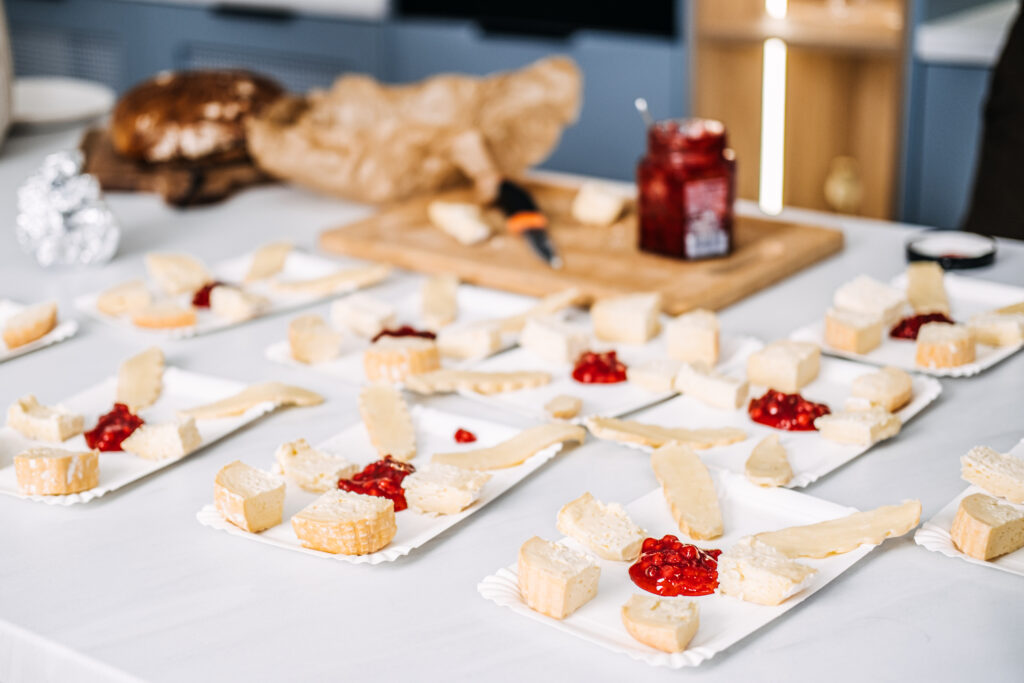
- Truffle honey or fig jam (on soft cheeses), but put them separately, for cheese purists who may get offended by condiments.
- Nuts and dried fruits (with firm cheeses)
- Celery – a nice clean palette refresher
- Sourdough, rye crackers, or even warm bread
Taste in order
Sip the wine, taste the cheese, then sip the wine again — this sequence lets you see how the cheese changes the structure and flavour of the wine.
The fat in cheese softens tannins in red wines, making them feel smoother, while acidity in white wines cuts through creaminess, refreshing your palate. Blue cheese often makes sweet wines taste even more luscious, while salty cheeses can make sparkling wines feel creamier and rounder!
✨ The point isn’t just “wine with cheese” — it’s about watching how they transform each other in real time.
Presentation: keep it simple
Wooden boards or slate look great. Group cheeses by strength or style. Bonus points for providing little tasting cards so guests know what they’re trying.
Regional pairings often work well
Cheeses and wines from the same region have grown up together — literally and culturally. The soil, climate, and traditions shape both in ways that naturally align. That’s why Sancerre with Valençay goat cheese, Alsace Gewürztraminer with Munster, or Swiss Gruyère with Jura wines feel so effortless: they’ve been enjoyed side by side for generations.
A cheese and wine party doesn’t have to be fancy. It just has to feel good. Don’t get stuck trying to impress — the real magic is watching people light up when they try something new and love it.
Common Wine and Cheese Party Questions
What’s the 3-3-3 rule?
Three types of milk, three textures, three countries. It’s an easy way to build a balanced selection without overthinking.
How many cheeses should I serve?
4–6 is ideal. More than that, and it starts to feel like homework.
How do I cut different cheeses properly?
- Soft wedges (Brie, Camembert): Slice like a cake, from the centre outwards, so everyone gets rind and centre.
- Blocks (Cheddar): Cut into thin slices, batons, or neat cubes for easy sharing.
- Firm wedges (Manchego, Comté): Slice into slim triangles from the wedge — the classic way to serve them.
- Rounds (small whole cheeses): Cut into radial wedges, like a pie.
- Stilton (and other blues): Traditionally, remove the top rind and spoon it out. If it’s firm, cut into neat wedges like any other wheel.
✨ Tip: Always aim for fairness — every guest should get both rind and centre in each slice.
What are the best classic wine and cheese pairings?
There are sooo many great combinations. Here are some of the most beloved — from elegant French classics to bold sweet-and-savoury matches:
- Brillat-Savarin or Délice de Bourgogne & Champagne
Can you tell we love this one? Triple-cream cheeses are ultra-rich and buttery. Champagne’s acidity and bubbles cut through the fat, leaving your palate refreshed, while highlighting the cheese’s silky texture. - Goat cheese (Valençay, Crottin de Chavignol) & Loire Sauvignon Blanc
The tang and earthiness of goat’s cheese are mirrored by Sauvignon Blanc’s citrus and herbal notes. Both grow in the same region — a “what grows together, goes together” classic. - Aged Cheddar & Cabernet Sauvignon
Cheddar’s protein and fat soften Cab’s tannins, making the wine taste smoother. In return, the wine’s dark fruit and oak complexity deepen the cheese’s savoury bite. - Blue cheese (Stilton, Roquefort, Gorgonzola) & Sweet Wines (Port, Sauternes, Tokaji, Recioto)
Salt and sharpness in blue cheeses can overwhelm dry wines. Sweet wines flip the script: sugar balances salt, creating harmony, like salted caramel in liquid form. - Manchego & Rioja
This Spanish sheep’s cheese has nutty, slightly sweet depth. Rioja’s savoury red fruit and gentle oak complement it perfectly. Regional pairings work because they’ve evolved together for centuries. - Parmesan & Prosecco (or Franciacorta)
Parmesan is salty, crystalline, and umami-rich. Sparkling wines lift and refresh, amplifying nutty complexity while keeping each bite lively. - Munster or Époisses & German Riesling (Spätlese or Auslese)
These pungent, washed-rind cheeses can be overwhelming, but Riesling’s acidity and touch of sweetness tame the funk, bringing balance and surprising elegance.




Very intetsting holding my own cheese and wine party in may at the chateau . Thank you for the guide lines