

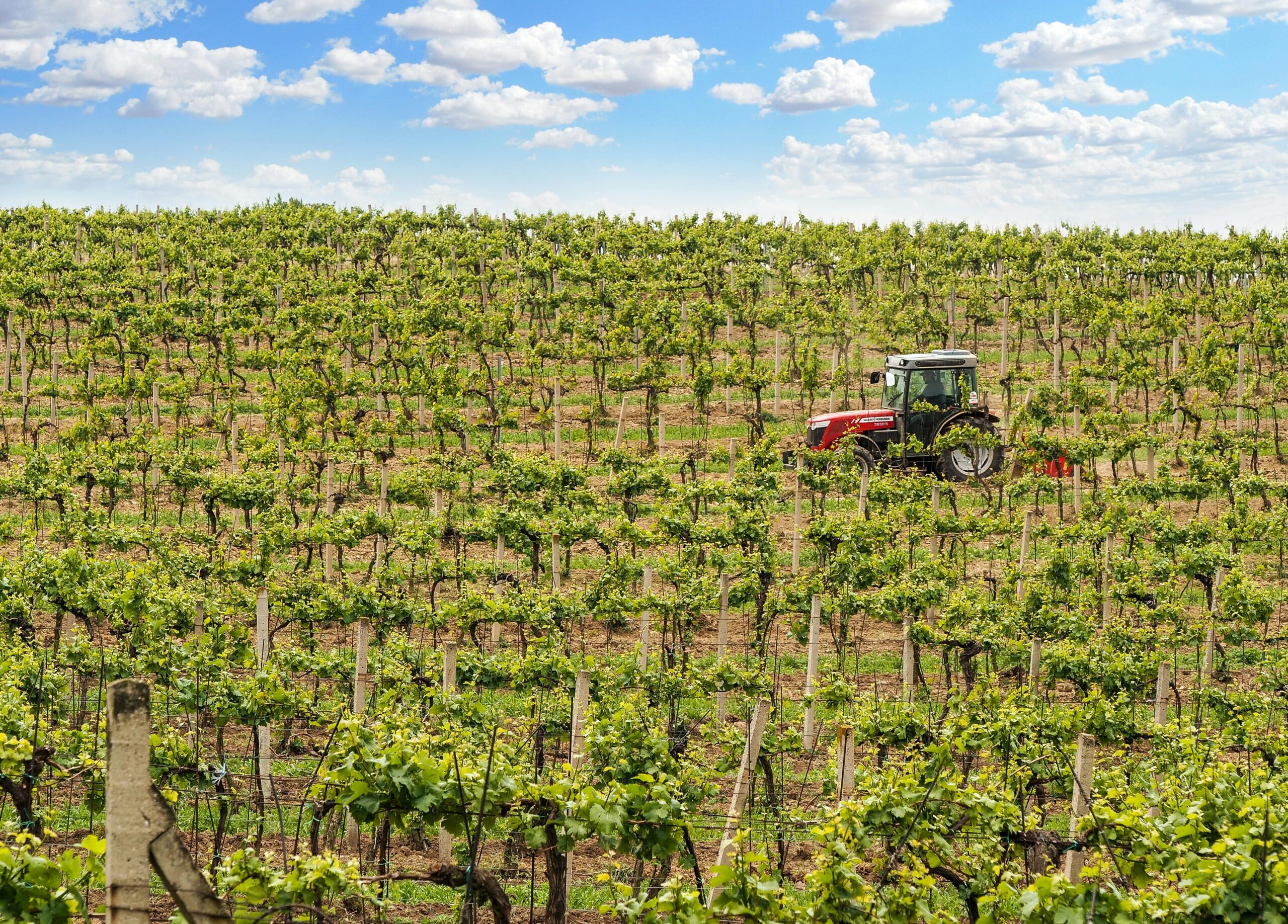
When we talk Champagne grapes, almost everything you drink is Chardonnay, Pinot Noir or Meunier. Together they cover ~99% of the region. Four others — Arbane, Petit Meslier, Pinot Blanc (Blanc Vrai) and Pinot Gris (Fromenteau) — still make the rulebook, though you’ll only find them in tiny pockets. They’re mostly used in heritage blends, or by producers who like a splash of acidity or perfume from something different.
Enter Voltis
Voltis is the newcomer. It’s the first mildew-resistant hybrid grape ever admitted to the Champagne AOC. Bred in 2002 by French and German researchers, it comes from a cross of Villaris × VRH 3159-2-12 — the latter is a breeding line carrying resistance genes from wild American and Muscadine vines. The idea was simple: create a grape that shrugs off mildew, so growers can slash fungicide use, but that still tastes like a proper vinifera wine grape.
One of the big worries with hybrid breeding is the arrival of “foxy” flavours. That’s the musky, grapey, almost candied note you get in native American grapes like Concord — fine for juice or jam, but jarring in fine wine. Voltis was designed specifically to avoid that, leaning toward neutral flavours more like Chardonnay or Pinot Blanc.
It joined the French catalogue in 2018 — meaning it was officially recognised by the French Ministry of Agriculture as a registered grape variety. Without this listing, growers cannot legally plant it for wine production in France. Being in the catalogue doesn’t automatically make it eligible for appellation wines, but it’s the first hurdle a new grape must clear.
By 2022, Champagne’s authorities gave Voltis the green light — in other words, the INAO (the national body overseeing appellations) authorised it as a “variety of interest for adaptation” within the Champagne AOC. This is not permanent approval but a provisional one, with strict rules: Voltis can be planted and vinified, but only under tight limits and with full traceability.
Why was it allowed?
Champagne is under pressure. Fungicide use is heavy in a wet, cool climate, and local communities aren’t keen on tractors spraying near their homes. At the same time, climate change is shifting ripening dates earlier, threatening the balance between sugar, acidity and flavour.
Voltis tackles both problems. It is resistant to downy and powdery mildew, which means up to 80% fewer treatments in those parcels. It also ripens about two weeks later than Chardonnay, Pinot Noir and Meunier. That matters because later ripening pushes harvest into cooler autumn conditions, slowing sugar accumulation and helping the berries hold onto acidity. In a warming climate where traditional grapes can peak too early (leading to higher alcohol and lower freshness), Voltis could be a useful safety net.
It also buds later in spring, roughly a few days behind early-bursting varieties, which gives it better protection against frost. A later budburst means the most vulnerable shoots aren’t exposed during the common April frosts in Champagne.
The limits are clear: growers can plant no more than 5% of their estate with Voltis, and any finished Champagne may include no more than 10% Voltis in the blend. Every Voltis parcel must be declared and registered, and each cuvée that includes it has to be monitored by the Comité Champagne. The trial will run until 2033, after which regulators will decide whether to add Voltis permanently, extend the experiment, or require the vines to be pulled up.
What’s actually being tested? Several things:
- Viticulture: how Voltis performs in different soils and sub-regions, and whether its resistance to mildew holds up under real-world pressure.
- Winemaking: how Voltis ferments, how it integrates in blends, whether it foams and ages properly in sparkling wine.
- Style impact: whether a small proportion (5–10%) changes the taste, aroma or typicity of Champagne.
- Sustainability: how much chemical use is actually reduced, and whether that benefit justifies keeping it.
How much is planted?
Almost nothing. In 2023, roughly 5 hectares went in. By 2024 it was around 6–7 hectares total. Compare that to Champagne’s 34,000 hectares — Voltis is barely a footnote. Expect a long wait before you see it in a bottle.
Who’s trying it?
- Champagne Drappier planted Voltis alongside their other rare grapes, making them the only house with all eight permitted varieties. They’ve said they won’t use Voltis before 2028, which means the first commercial bottles wouldn’t land until ~2030 once ageing is done.
- A few growers in Montagne de Reims and elsewhere have planted small plots, supplying grapes to the Comité Champagne for analysis.
- The vast majority of houses, from independent growers right up to grande marques like Charles Heidsieck and Billecart-Salmon, are continuing with the classic trio. For them, Voltis remains an experiment happening elsewhere, not something they are putting into their wines.
In the vineyard
Voltis is vigorous, with upright growth and moderately fertile buds. It needs long pruning (keep more buds on the cane) to crop properly. If over-cropped, the fruit stays low in sugar and very high in acidity. Managed carefully, it produces balanced musts.
- Strengths: strong resistance to downy and powdery mildew; slightly later budburst (so less frost risk); later ripening that can help preserve acidity and balance sugars in warmer years.
- Weak spots: not resistant to black rot; prone to potassium and magnesium deficiency in poor soils; shoots can be brittle in wind.
In the glass
Voltis was bred to be neutral. Think clean and vinifera-like, without musky hybrid notes. On its own, the flavour is simple. In blends, though, it seems to do its job.
In 2023, the Comité Champagne ran blind tastings with about 700 experts. Base wines of 90% Chardonnay / 10% Voltis scored highest — even over pure Chardonnay. Tasters called them rounder, smoother and still very “Champagne”. A 95/5 blend also did well. The idea is that Voltis softens the edges and boosts acidity without sticking out.
The Comité has already made a few micro-cuvées (undosed Brut Nature) from trial plots to check foaming, flavour and ageing potential, but these are for internal research only. Consumers won’t see Voltis in a commercial Champagne until the end of this decade. Houses like Drappier have said they won’t consider blending it before 2028, which means the earliest bottles could arrive around 2030 after the required cellar ageing.
Why it matters
Voltis isn’t here to take over. Chardonnay, Pinot Noir and Meunier remain the backbone. But Voltis gives growers a tool against mildew, helps with sustainability targets, and offers a later-ripening option as the climate warms.
The stakes are high: if it proves itself, Voltis could stay as a small but permanent part of Champagne’s future. If not, the vines could literally be pulled out after 2033.
Opinions and controversies
- Optimists see Voltis as a smart insurance policy: mildew resistance means healthier vines with far fewer sprays, and later ripening could help preserve freshness as harvests creep earlier in warmer years.
- Traditionalists are wary. For some, letting a hybrid (with non-vinifera genes) into Champagne feels like crossing a line, even if it’s capped at 10%. There’s worry that Champagne’s image — built on heritage and purity — might be muddied if consumers hear “hybrid grape” on the label.
- Quality questions remain: will Voltis age as gracefully as Chardonnay or Pinot? Will its resistance hold, or will mildew eventually adapt?
- Early tastings suggest Voltis blends are stylistically on-point, but until bottles hit the market, sceptics will reserve judgement.
In short, Voltis is shaping up to be a quiet supporting actor rather than a scene-stealer. Its role is to keep Champagne’s style intact under tougher conditions, not to rewrite the flavour script.
👉 So, for now Voltis is one to watch. You won’t taste it in your glass until the end of this decade, but it’s part of Champagne’s big question: how do you protect tradition in a changing climate?
Quick facts on Voltis
- Bred in: 2002, France/Germany (Villaris × VRH 3159-2-12).
- Joined French catalogue: 2018 (officially recognised for planting).
- Champagne approval: 2022, on a 10-year trial.
- Planting limits: max 5% of estate.
- Blending limits: max 10% in any Champagne.
- Current area: ~6–7 ha (out of 34,000).
- Ripening: ~2 weeks later than Chardonnay/Pinot, with later budburst (frost protection).
- Strengths: mildew resistance, freshness in warmer years.
- Weaknesses: black rot sensitivity, nutrient issues if not managed.
- First possible release: ~2030.




I only heard of Voltis from Drappier’s newsletter. Phil’s briefing is excellent.
By the way, Drappier are a fantastic Champagne house, well removed from the traditional growing areas, but always keen to use the full palate of grape varieties to offer a great range of styles.
Thanks for your comment! Yes, Drappier really are brilliant – it’s great how they experiment with less common grape varieties while keeping such a strong sense of place.