
The Antinori Story: 26 Generations of Bold Winemaking
If you follow Italian wine, Antinori is a through-line from Renaissance Florence to the modern Super Tuscan era. The family has been at it since 1385, when Giovanni di Piero Antinori joined the Florentine Winemakers’ Guild. Twenty-six generations later, the business is still family-run and still guided by the same north star: Te duce proficio — “with you as my guide, I make progress”. In Antinori-speak, that has always meant: honour place, question dogma, and improve every vintage.
If you’d like to buy Antinori wines, you’re welcome to browse our curated Antinori collection and experience one of Italy’s most celebrated winemaking legacies.
Key milestones worth knowing (and why they matter):
- 1506: The family buys Palazzo Antinori in Florence — still home base and a tangible reminder that wine here is culture, not just commerce.
- 1928: Villa Antinori (by Marchese Niccolò) sets a house style: Tuscan roots with a modern polish.
- 1940: Castello della Sala in Umbria expands the playbook beyond Tuscany and lays the groundwork for Italy’s top white-wine projects.
- Since 1966: Piero Antinori (now Honorary President) pushes a quality-first agenda; today, his daughters Albiera (President), Allegra, and Alessia carry the baton.
The turning point came in the late 1960s–1970s. With Giacomo Tachis (hired 1961) in the cellar and Bordeaux legend Émile Peynaud consulting (1968), Antinori did what seemed radical in Chianti at the time:
- Lowered yields to chase concentration, not volume.
- Dropped white grapes from the Chianti blend (sacrilege then; common sense now).
- Brought in French barriques for precision and toast accents instead of only large casks.
The result? Tignanello. First made in 1971, released 1974, Sangiovese-led with Cabernet support, temperature-controlled fermentation, and small-barrel aging. It violated DOC rules, so it wore the humble “vino da tavola” label — and still redefined what Tuscany could be. In 1975, 20% Cabernet (sourced from the adjacent Solaia site) sharpened the wine’s architecture and helped catalyze the Super Tuscan movement.
Solaia followed (first vintage 1978): initially Cabernet Sauvignon/Cabernet Franc (95/5), essentially the mirror image of Tignanello. Sangiovese joined in 1982. The 1997 Solaia became Wine Spectator’s 2000 Wine of the Year — the first Italian wine to take the top spot.
Expansion in the 1980s–2000s kept the momentum real: Prunotto (Piedmont), Tormaresca (Puglia), and later joint ventures in the U.S. (Stag’s Leap Wine Cellars, Col Solare) plus Antica in Napa. In 2012, Antinori opened Antinori nel Chianti Classico near Bargino — the first newly built winery in 26 generations — an underground, hillside structure that doubles as a masterclass in sustainable, gravity-flow design. Leadership has since shifted smoothly to Piero’s three daughters.
The Antinori Map: Tuscany and Beyond
Tuscany (the heartland)
Chianti Classico south of Florence is home turf:
- Tenuta Tignanello (near Santa Cristina; 319 ha): birthplace of Tignanello and Solaia.
- Badia a Passignano: an ancient abbey estate producing Chianti Classico Riserva.
- Pèppoli: earlier-drinking, fruit-forward Chianti Classico.
Viticulture here is meticulous: low yields, careful site selection, and targeted use of Sangiovese with supporting varieties (Canaiolo, Ciliegiolo, Colorino, Mammolo) plus small parcels of Cabernet Sauvignon and Cabernet Franc. The Bargino winery (2012) ties it all together — built under a hillside with local materials, vineyard-blanketed roofs, and gravity-flow — voted #1 “World’s Best Vineyards” in 2022 for wine tourism.
Elsewhere in Tuscany:
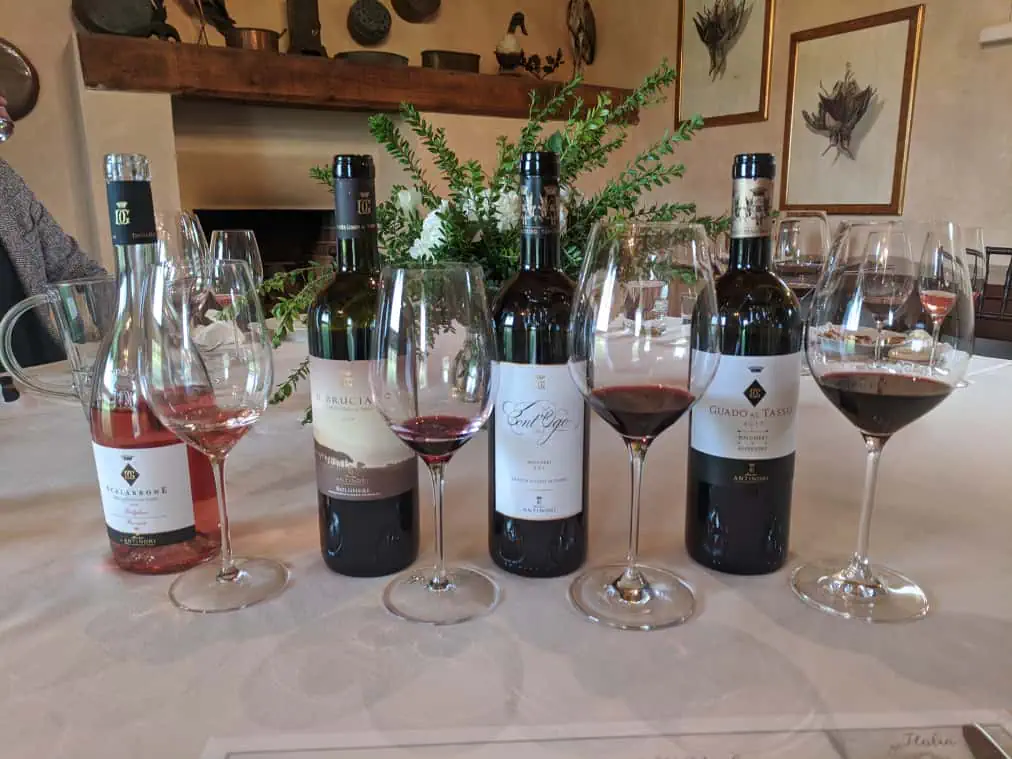
- Bolgheri – Tenuta Guado al Tasso (900 ha; 300+ under vine): Bordeaux grapes on marine sediments; flagship Guado al Tasso (Cabernet Sauvignon, Merlot, Petit Verdot).
- Montalcino – Pian delle Vigne (acq. 1995): classic Brunello di Montalcino from Sangiovese Grosso.
- Maremma (Grosseto) – Le Mortelle: Cabernet, Vermentino, and more; sleek, contemporary cellars.
- Maremma (Sovana) – Fattoria Aldobrandesca: Aleatico, Cabernet Franc on tuffaceous soils.
- Eastern Tuscany – La Braccesca: Vino Nobile di Montepulciano (Sangiovese) and Cortona Syrah.
- Fiesole – Tenuta Monteloro: higher-elevation, cool-climate whites (Riesling etc.).
Beyond Tuscany (Italy)
- Umbria – Castello della Sala (acq. 1940): 566 acres on calcareous soils; home to Cervaro della Sala (Chardonnay–Grechetto), Orvieto Classico, and small plots of Pinot Noir — historic cellars, mold-coated walls, the whole spell.
- Piedmont – Prunotto (Alba): Barolo, Barbaresco, Barbera, more (partnership 1989; full 1994).
- Lombardy – Tenuta Montenisa (Franciacorta): metodo classico under Marchese Antinori – Tenuta Montenisa.
- Puglia – Tormaresca (est. 1998): Bocca di Lupo (Castel del Monte DOC; Aglianico on limestone) and Masseria Maìme (Salento; Negroamaro, Primitivo). A serious lift for southern quality.
International Ventures
- Napa – Antica (Antinori California): Atlas Peak property (acq. 1985), 222 ha up to 600 m elevation; Cabernet Sauvignon, Cabernet Franc, Chardonnay on volcanic soils — Italian restraint meeting California sunshine.
- Washington – Col Solare (with Chateau Ste. Michelle): Red Mountain Bordeaux blends.
- Napa – Stag’s Leap Wine Cellars (co-owner): a full-circle nod to Piero’s admiration for Napa.
- Chile – Haras de Pirque (Maipo): horseshoe-shaped organic winery; Cabernet–Carménère blends (Albis dedicated to Albiera).
- Romania – Vitis Metamorfosis (Dealu Mare; launched 2013): local + international varieties.
Scale without facelessness: Roughly 20–23 million bottles annually across ~150 labels, about a dozen estates in Italy and several abroad — still 100% family-owned.
The Mindset Behind Antinori’s Winemaking
Antinori’s philosophy is deceptively simple: tradition is a foundation, not a fence. As Piero Antinori puts it, ancient roots are vital, but they must never choke innovation.
What that looks like in practice:
- Treat every project as R&D.
- Under Giacomo Tachis (1961–1993): temperature-controlled fermentations, full malolactic for reds, French barriques when appropriate.
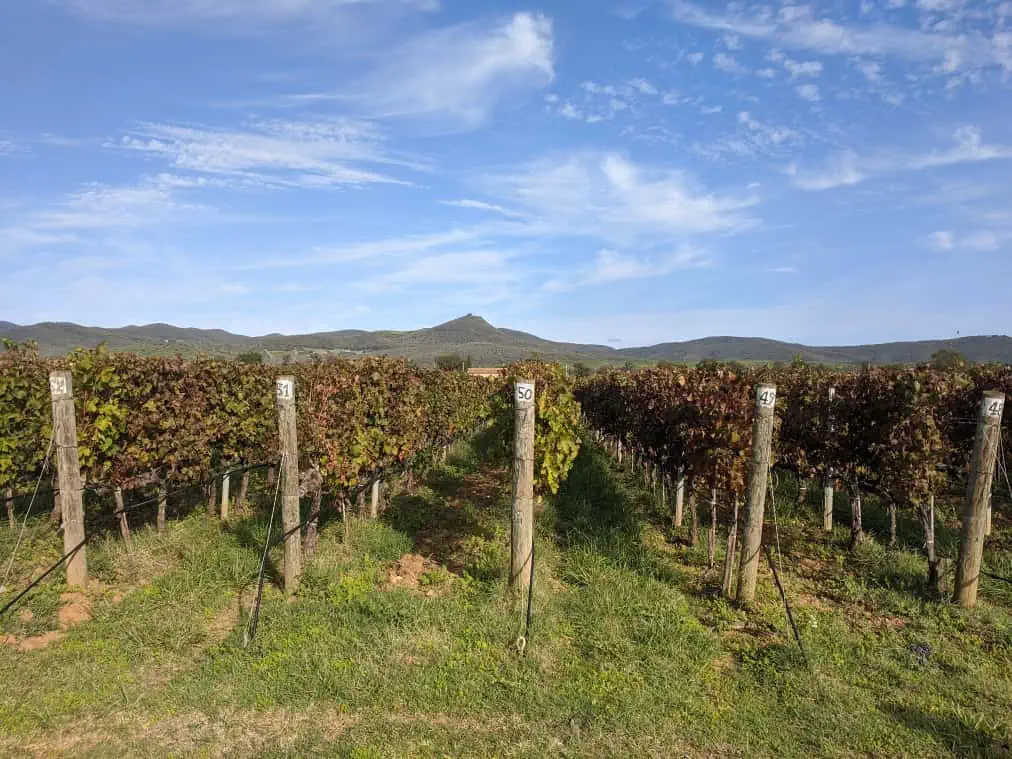
- Vineyard work: lower-yielding clones, smarter orientations, spurred cordon training, higher density when it improves fruit.
- The Tenuta Tignanello “experimental lab” of the 1970s trialed density and clonal selection to intensify Sangiovese.
- Willingness to ignore rigid DOC rules when they conflict with quality (hence the Super Tuscans).
Sustainability isn’t a sticker here — it’s the build:
- Reduced chemical inputs, water stewardship, biodiversity initiatives; organic and IPM where sensible.
- Bargino is underground (natural temperature regulation), gravity-flow, with photovoltaics — aesthetic and function integrated by architect Marco Casamonti.
- Ongoing clonal research for Sangiovese and other natives to improve vine stock and preserve heritage.
Goal: world-class wines that are honestly Tuscan/Umbran/Puglian/etc. — modern in technique, local in voice.
The People Behind the Labels
- Marchese Piero Antinori: strategist, diplomat, and the steady hand behind the modern rise. Decanter “Man of the Year” (1986); now Honorary President. Daughters Albiera (President), Allegra (hospitality), Alessia (enology) mark the first female-led era.
- Giacomo Tachis (1933–2016): the “father of Super Tuscans,” creative force behind Tignanello, Solaia, and early Sassicaia development. Decanter “Man of the Year” (2011).
- Renzo Cotarella: joined 1979 to elevate Castello della Sala (leading to Cervaro della Sala in 1985), later CEO and chief enologist. He pushed the “own the vineyards, empower the estate teams” model that kept quality high during expansion.
- Earlier figures & advisors: Niccolò Antinori (Villa Antinori; pre-WWII modernization), Lodovico Antinori (founded Ornellaia in 1981), occasional consultants (e.g., Michel Rolland at Guado al Tasso), but the through-line remains family philosophy.
Grape Varieties That Define Antinori
Tuscany’s spine: Sangiovese
- Pèppoli Chianti Classico: bright cherry, earlier drinkability.
- Badia a Passignano Chianti Classico Riserva: abbey vineyards, deeper structure.
- Pian delle Vigne Brunello: 100% Sangiovese (Brunello) — plum, spice, and classical large-cask texture.
Bolgheri’s edge: Bordeaux grapes on sea breezes
- Guado al Tasso Bolgheri Superiore: ripe cassis, wild herbs, polished tannins, saline lift.
- Tignanello estate (late 1960s onward): Sangiovese supported by Cabernet Sauvignon/Cabernet Franc.
- Tignanello Toscana IGT: typically ~80–85% Sangiovese; 15–20% Cabernet Sauvignon/Cabernet Franc (modern vintages around 80/15/5).
- Solaia Toscana IGT: recent releases roughly 75% Cabernet Sauvignon, 5% Cabernet Franc, 20% Sangiovese — blackcurrant, violet, spice.
Umbria’s statement whites (Castello della Sala)
- Cervaro della Sala (1985): Chardonnay–Grechetto; partial oak ferment/age; Burgundian frame, Umbrian soul; ages gracefully.
- Also Sauvignon Blanc, Semillon, Pinot Bianco, Viognier, pockets of Riesling/Traminer, and a noteworthy Pinot Nero.
- Conte della Vipera: Sauvignon/Semillon.
- Muffato della Sala: late-harvest (botrytised) Sauvignon, Grechetto, Traminer, Riesling.
Piedmont (Prunotto)
- Nebbiolo for Barolo/Barbaresco (e.g., Bussia), plus Barbera, Dolcetto, Moscato, Brachetto.
Puglia (Tormaresca)
- Aglianico (Bocca di Lupo), Negroamaro, Primitivo, with some Cabernet Sauvignon and Chardonnay.
Franciacorta (Montenisa)
- Chardonnay and Pinot Noir for metodo classico.
Selected labels to actually drink (and why):
- Tignanello Toscana IGT — the original modern Tuscan game-changer: dark fruit, leather, spice, velvety lines.
- Solaia Toscana IGT — Cabernet-driven power with elegance; vintages like 1997 and 2015 are reference points.
- Guado al Tasso Bolgheri Superiore DOC — coastal polish with cassis and macchia herbs.
- Cervaro della Sala Umbria IGT — oak-kissed Chardonnay blend that ages into nuts, citrus oils, and cream.
- Villa Antinori Chianti Classico Riserva DOCG — classic red cherry and earth, in a modern key.
- Badia a Passignano Chianti Classico Gran Selezione DOCG — 100% Sangiovese from an 11th-century abbey: depth, cocoa, balsam.
- Brunello di Montalcino Pian delle Vigne DOCG — large-cask grace: plum, blackberry, leather, spice.
- Prunotto Barolo Bussia DOCG — rose, tar, red fruit; firm Nebbiolo tannins.
- Tormaresca Bocca di Lupo Castel del Monte DOC — Puglian Aglianico with Mediterranean lift.
- Franciacorta Cuvée Royale Brut (Montenisa) — classical citrus-brioche sparkle.
From entry-level Santa Cristina (since 1946) to Vinsanto del Chianti Classico (Trebbiano/Malvasia, long small-cask aging), the range is broad but purpose-driven: each label is meant to speak clearly of its place.
Most Admired, Most Awarded
- Decanter “Man of the Year”: Piero Antinori (1986), Giacomo Tachis (2011).
- Wine Spectator Wine of the Year: Solaia 1997 (awarded 2000). Tignanello turns up frequently in Top 100s (e.g., 2021 vintage in 2022).
- Drinks International – World’s Most Admired Wine Brands: #1 in 2023 — first Italian #1 since 2011; Sassicaia #6, Tignanello #21 that year.
- World’s Best Vineyards: Antinori nel Chianti Classico #1 (2022) for visitor experience.
- Italian and global critics: multiple Tre Bicchieri, frequent 95–100 point scores (Solaia 2015 drew multiple 100s and top honours).
- Industry distinctions: Vinitaly International Award (2006), Wine Enthusiast Lifetime Achievement (2016), PFV leadership, and national honours.
Admiration isn’t just for age — it’s for consistency at scale and a willingness to evolve without losing identity.
Fun Facts, Deep Roots
- 26 generations and counting. This is the first era led by women (Albiera, Allegra, Alessia). A 17th-century Antinori marriage into the Medici line ultimately connected the family to what’s now the Tignanello estate (then Fonte de’ Medici). Palazzo Antinori remains home and HQ.
- Cantinetta Antinori (Florence, 1957) married heritage with hospitality long before it was a trend; there are now branches in Zurich, Vienna, Moscow, and beyond.
- Bargino is an architectural sleight of hand — mostly invisible in the hillside, with vineyard roofs, twin skylights, and a dramatic spiral. Since 2012, a 300-meter underground corridor has become an art space with historical artifacts.
- Innovations that stuck: Tignanello (1971) without white grapes in the Chianti zone; Solaia (1978) early Cabernet-dominant icon; Cervaro (1985) among Italy’s first serious barrel-fermented Chardonnays; early adopter of IGT (1992); French clones/rootstocks; single-vineyard bottlings; research on ancient Sangiovese clones at Badia a Passignano.
- Scale with quality: 20M+ bottles/year, with micro-productions like Solaia (sometimes ~500 cases) crafted with jewel-box attention — made possible by a decentralised, estate-first model.
- Primum Familiae Vini founding member; in 2020 PFV launched a €100,000 family-business sustainability/innovation prize.
- Gastronomy & stays: From Osteria di Passignano (Michelin-starred) and Rinuccio 1180 (atop the Chianti Classico winery) to agritourism at Fonte de’ Medici; in Puglia, Bocca di Lupo’s new tasting spaces; in Chile, Haras de Pirque adds a tapas restaurant.
Plan Your Visit: Tours, Tastings, Restaurants
Chianti Classico (Bargino) — year-round by appointment. Expect vineyard walks, gravity-flow and barrel-cellar tours, the family art/archives, and a structured tasting (often Chianti Classico, Tignanello or Badia a Passignano, plus a white or dessert). Lunch at Rinuccio 1180 overlooks the vineyards.
Badia a Passignano — tour the abbey cellars (where the Riserva ages) and dine at Osteria di Passignano (wild boar ragù meets Gran Selezione — Tuscan heaven). The 2012 Bargino opening was the first time in 26 generations a winery was purpose-built to welcome visitors — fitting for a philosophy built on patience, precision, and transparency.
Other Italian estates (highlights):
- Tenuta Guado al Tasso (Bolgheri) — coastal vineyards and Bordeaux-variety masterclasses.
- Le Mortelle (Maremma) — striking, inverted-cone-inspired architecture; wines, olive oils, estate produce.
- Castello della Sala (Umbria) — medieval castle, underground cellars, and small-group white-wine tastings with cheese pairings.
- Prunotto (Alba) — Barolo/Barbaresco deep dives.
- Tenuta Bocca di Lupo (Puglia) — sun-baked Aglianico rows with modern cellars and Apulian food pairings.
City options: urban enotecas in Florence and Milan, plus Cantinetta Antinori restaurants bring the estate experience into town.
Abroad:
- Antica (Napa) — by appointment; mountain vineyards, rustic stone winery.
- Haras de Pirque (Chile) — organic viticulture tours with Andean views, finishing with tapas.
Across properties, guests consistently mention two things: the blend of history and forward motion, and a genuine hospitality that feels family-run, not corporate.
Antinori: Not Just History, But Tomorrow
From 14th-century Florence to a network of estates spanning Tuscany, Umbria, Piedmont, Puglia, and the Americas, Antinori has proven that innovation and identity are not opposites. Tignanello, Solaia, Cervaro — these weren’t just successful wines; they reshaped expectations for Italy.
What keeps it compelling is the through-line: limestone in Chianti, tuff in Umbria, volcanic rock on Atlas Peak — the family keeps chasing clarity of place, with the tools of modern enology and the restraint of experience. If you drink the range from Villa Antinori up to Solaia, you don’t get sameness — you get a house that knows when to polish and when to step back.
Visiting an Antinori estate is like stepping into a living archive — except the work isn’t finished. The next vintage is always the most interesting one.