
Get involved!
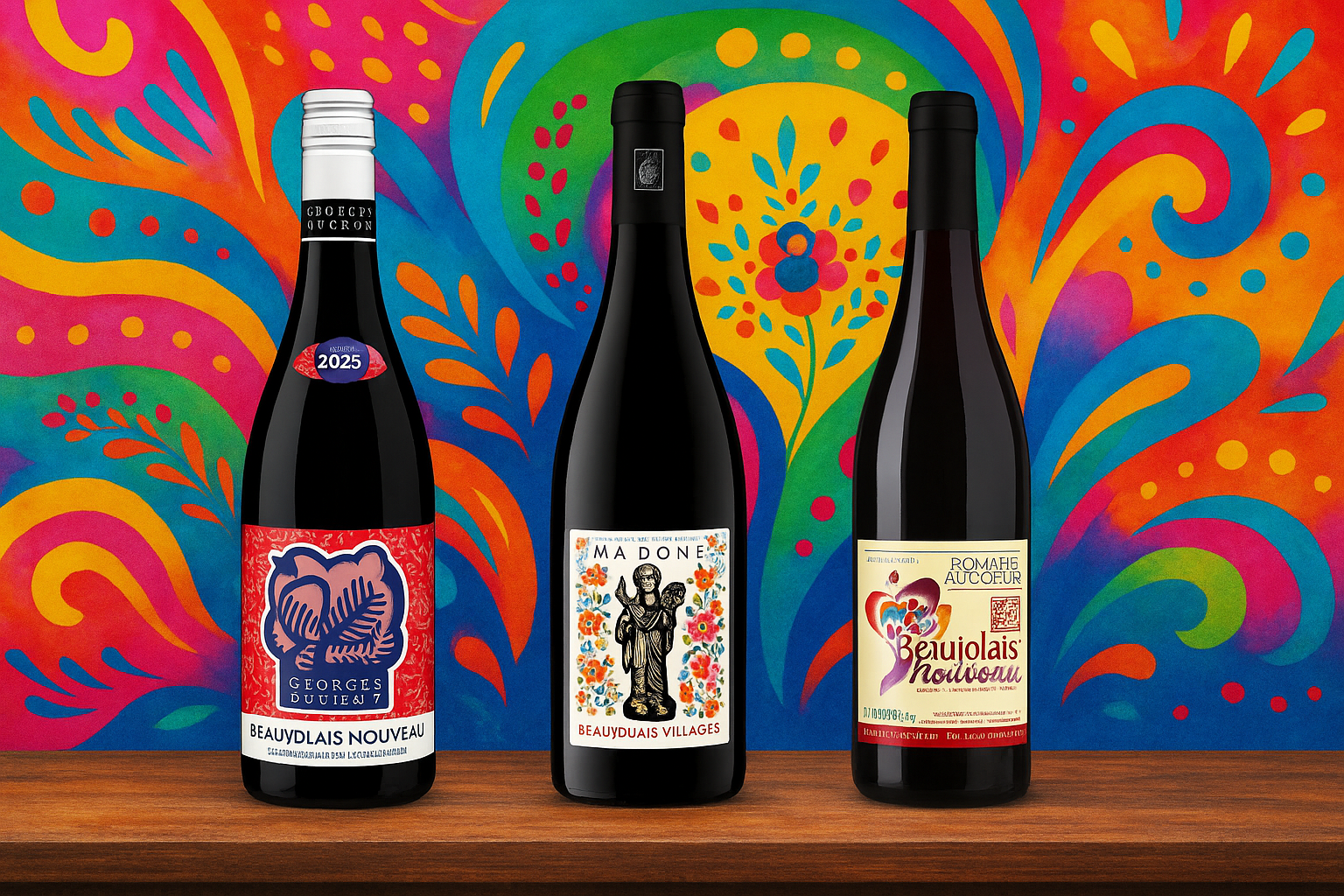
Celebrate Beaujolais Nouveau Day with us in Birmingham — taste the new vintage, chat wine, and join the fun. We’ll be pouring Georges Duboeuf and other favourites in store, plus you can shop Beaujolais online to take the celebration home.
History of Beaujolais Nouveau
Beaujolais Nouveau’s origins trace back to local harvest celebrations in the Beaujolais region of France. As early as the 19th century, growers would toast the end of harvest with young, freshly fermented wine from that year’s grapes. This practice was an example of vin de primeur – wines sold in the same year they were harvested.
Under the Appellation d’Origine Contrôlée (AOC) system established in 1937, however, Beaujolais producers were initially forbidden from selling the new year’s wine until 15 December of the harvest year. On 13 November 1951, after lobbying by local vignerons, the rules were relaxed to allow earlier sale of vin de l’année – the birth of what would become Beaujolais Nouveau. The regional wine authority (UIVB) formally designated 15 November 1951 as the first official release date for the newly christened Beaujolais Nouveau.
Throughout the 1960s, innovative marketing helped propel Beaujolais Nouveau beyond its humble beginnings. In France, a friendly race to Paris emerged, with négociants and couriers competing to deliver the first bottles to the capital’s bistros. British enthusiasts soon joined the fray – Beaujolais races organised by English wine clubs had drivers rushing back from France with carloads of the new vintage (sometimes even removing spare tyres to fit more wine).
By the 1970s, media coverage of these antics turned the annual release into a national event in France. To avoid logistical hiccups (like 15 November falling on a weekend), the official release day was eventually standardised: in 1985, the INAO set the release at 12:01 a.m. on the third Thursday of November worldwide. From that point on, “Le Beaujolais Nouveau est arrivé!” became the joyous rallying cry each November.
Beaujolais Nouveau Key Figures and Producers
One name is virtually synonymous with Beaujolais Nouveau: Georges Duboeuf. Often dubbed the “King of Beaujolais”, Duboeuf almost single-handedly transformed Nouveau into a worldwide phenomenon. After founding his négociant business in 1964, he built an empire by partnering with hundreds of growers and cooperatives across Beaujolais.
At his peak, Georges Duboeuf’s operation handled over 20 million bottles a year – including around 4 million bottles of Nouveau, roughly 15% of all Beaujolais Nouveau sold globally. He pioneered aggressive international marketing: Duboeuf’s team orchestrated headline-grabbing delivery stunts, such as flying the first cases of Nouveau to New York on the Concorde and even a parachute drop of a bottle at the Eiffel Tower in 1985. His flower-adorned labels and slogan-driven campaigns helped cement the wine’s celebratory image. As one wine historian noted, “It would not be inaccurate to say he almost single-handedly made Beaujolais Nouveau a worldwide phenomenon.”
Beyond Duboeuf, others have helped shape Beaujolais Nouveau’s story:
- Big wine houses such as Mommessin and Louis Jadot made their own Nouveau, working with growers to keep it bright and consistent.
- Cooperatives in Juliénas and Belleville bottled fruity, good-value wines like the popular Pisse-Dru label.
- Independent winemakers, including Jean-Claude Lapalu and Karine Lavrieux, now produce natural, small-batch Nouveau with less sulphur and fresher flavours.
- Cultural promoters, such as Welsh restaurateur Clement Thomas (who started Beaujolais Day in the 1960s) and American importers (who spread the craze in the 1980s), also played key roles in popularising the tradition.
Traditions and Celebrations
Beaujolais Nouveau is as much a cultural event as it is a wine release. By law, the wine cannot be released before the stroke of midnight on the third Thursday of November, and for decades this rule was taken literally — trucks would roll out of Beaujolais at 12:01 a.m., and airlines and couriers stood ready to rush the first shipments across the globe. The moment the clock struck, signs appeared in café windows proclaiming “Le Beaujolais Nouveau est arrivé!” (“The new Beaujolais has arrived!”) — a phrase that became a seasonal slogan worldwide.
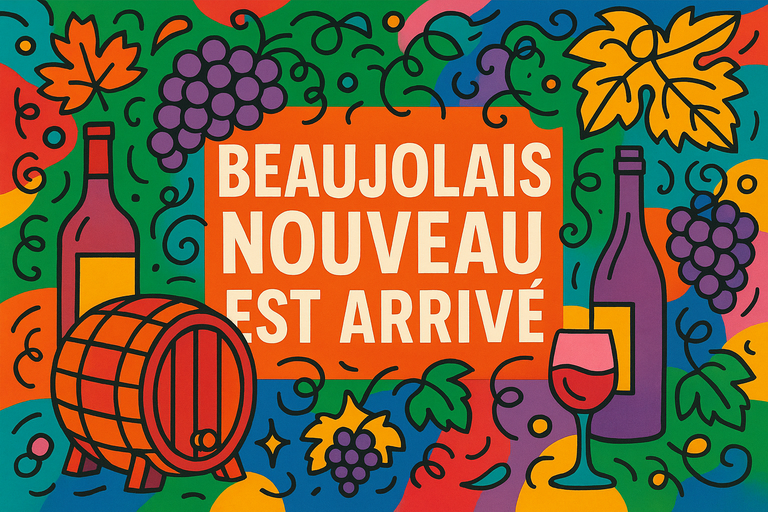
In Paris, restaurants still display the famous banner “Le Beaujolais Nouveau est arrivé!” on release day, and many bistros and wine shops continue to hang such signs to attract patrons for the first taste of the new vintage.
In the Beaujolais region, more than 100 local festivals accompany the launch each year. The village of Beaujeu (the historical capital of Beaujolais) hosts Les Sarmentelles, a five-day festival culminating in a midnight unveiling of the new wine amid fireworks and music. The winner of the festival’s tasting contest is even awarded their weight in Beaujolais wine. Other villages celebrate with torchlight processions, communal feasts, and dances — all in honour of le Nouveau.
Producers often compete to outdo each other with festive label designs and celebrations at their wineries. Since 2017, at least one major producer has held an annual label art contest, attracting hundreds of submissions for the year’s Nouveau bottle design. Georges Duboeuf famously produces a limited run of silk ties each year decorated with his Nouveau label art, underscoring the wine’s status as a fashionable seasonal icon.
Around the world, Beaujolais Nouveau Day is embraced with equal enthusiasm, often adapted to local culture. In Japan, the wine became so popular that it inspired a truly unique tradition: bathing in it. Each November, the Hakone Kowakien Yunessun spa resort near Tokyo offers Beaujolais Nouveau baths, where revellers soak in tubs tinted with red wine while a sommelier pours real Beaujolais Nouveau into the water — and into bathers’ glasses. This quirky celebration has been running for well over a decade, reflecting Japan’s status as Nouveau’s largest export market. Japanese media routinely show images of wine-dyed hot springs and toasting bathers marking the occasion.
The United Kingdom fostered one of the most legendary traditions: the Beaujolais Run. Starting in the late 1970s, British wine lovers turned the release into an automotive race — participants dashed from England to Beaujolais and back, aiming to be first to deliver a bottle to London. The competition saw everything from sports cars to the Royal Air Force take part (who in 1987 famously flew a case to RAF Brize Norton in a Harrier jet). The Beaujolais Run became the stuff of oenological folklore, and even inspired a charity rally that still exists today, minus the racing element.
In recent years, the UK’s biggest Beaujolais Nouveau celebrations have surprisingly taken place in Swansea, Wales. There, Beaujolais Day has evolved into a massive social event: restaurants and bars in Swansea are fully booked a year in advance for the third Thursday of November. The tradition is said to have started at a Swansea bar in the 1960s, and by 2015 it was injecting an estimated £5 million into the local economy. On Beaujolais Day, Swansea’s eateries offer special menus, live music, and of course, plenty of Nouveau — it’s become “the biggest social event of the year” for the city’s young professionals and party-goers.
Whether in a village cellar in France or a trendy Tokyo spa, the annual arrival of Beaujolais Nouveau is treated as a toast to the new vintage — an excuse to gather with friends, celebrate the harvest, and indulge in a bit of merriment as autumn turns to winter.
Winemaking Process: What Makes Nouveau Unique
Beaujolais Nouveau is made entirely from the Gamay noir à jus blanc grape (simply known as Gamay), a variety known for vibrant berry flavours and low tannin. While standard Beaujolais wines – including the more serious cru Beaujolais – may spend months fermenting and ageing, Nouveau is produced with remarkable speed. Grapes are harvested by hand in early September and bottled by late October, meaning it goes from vine to bottle in about 6–8 weeks. Achieving a palatable wine in such a short time requires a special technique: carbonic maceration.
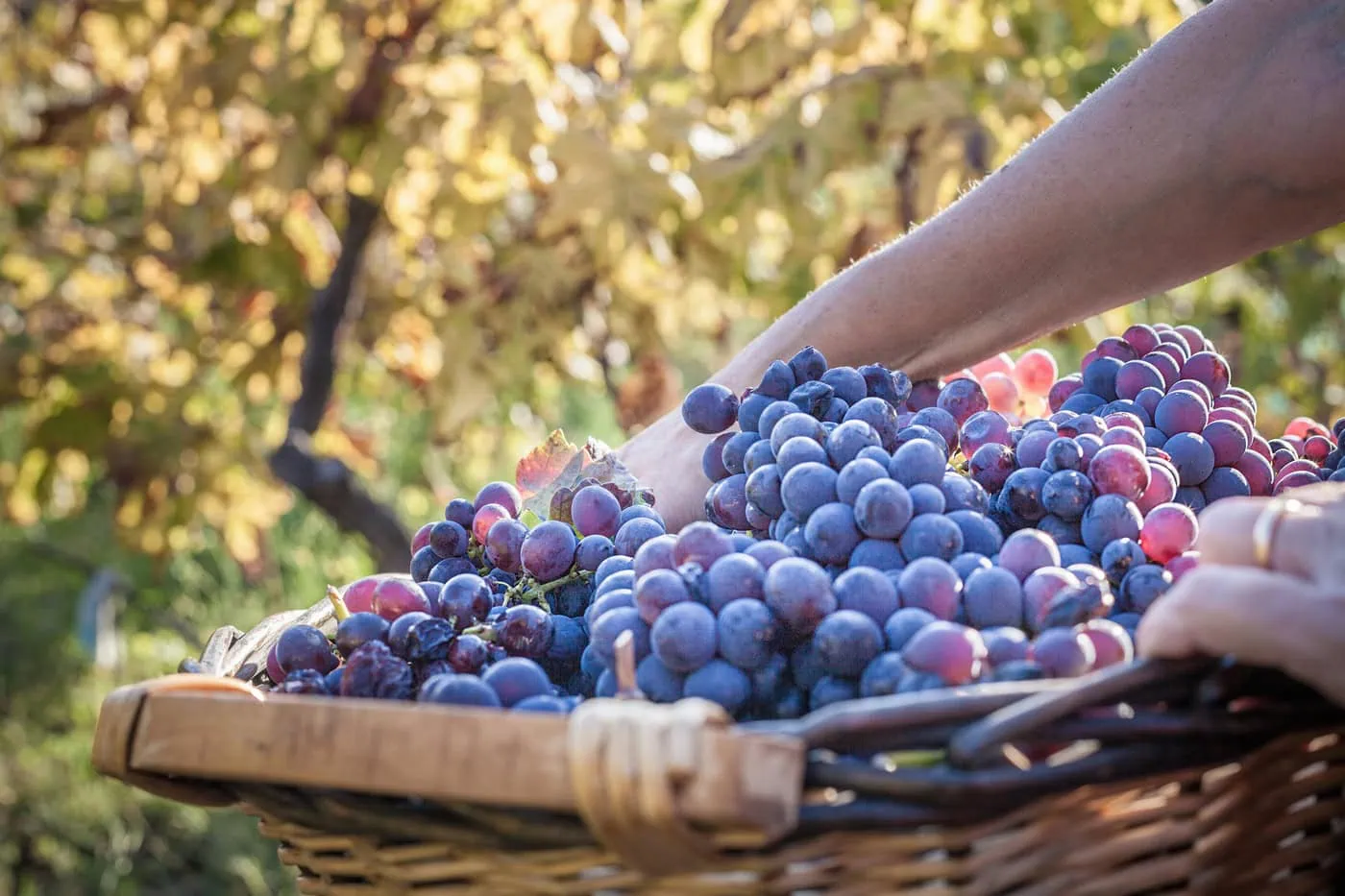
In carbonic maceration, whole clusters of grapes (uncrushed and still on their stems) are placed into a sealed fermentation tank filled with carbon dioxide. In this oxygen-free environment, enzymatic fermentation begins inside the uncrushed grapes themselves. Each berry ferments from the inside out, bursting as alcohol builds up. The grapes at the bottom are naturally crushed by the weight of the fruit above, releasing juice that undergoes a more conventional yeast fermentation. The maceration time is short — often just 4 to 10 days — and the wine is then quickly pressed off the skins to avoid extracting bitterness. The result is a wine with bright fruit flavours and almost no tannin.
This process yields the trademark flavour profile of Beaujolais Nouveau: juicy red berries (strawberry, raspberry, cherry) and fruity esters that often resemble banana, bubblegum, or candied fruits. Those banana and tutti-frutti aromas (linked to a specific yeast strain introduced in the 1970s) were once so strong that critics derided Nouveau as “liquid candy.” Many producers now use gentler fermentation techniques and different yeasts, resulting in wines that still burst with raspberry jam, cranberry, and ripe grape flavours, but with more balance. They typically have high acidity, a light body, and a slight spritz of CO₂, enhancing freshness.
Another hallmark is malolactic fermentation (MLF), which softens the wine’s acidity by converting tart malic acid into lactic acid. Even though Nouveau is rushed to market, winemakers ensure MLF finishes so the wine doesn’t re-ferment in bottle. This makes the texture smoother and adds a touch of buttery roundness to its lively profile.
By French AOC regulation, all grapes must be hand-picked, ensuring berries remain intact for carbonic maceration. Once fermentation is complete, the wine is clarified, filtered for brightness, and bottled with minimal ageing.
Beaujolais Nouveau is a commercial name, not a separate appellation; it can be made from Beaujolais AOC or Beaujolais-Villages AOC grapes (but not from the ten Cru Beaujolais villages). About one-third of the region’s production is devoted to Nouveau each year, with producers using no more than 50% of their crop for it. This ensures quality standards are upheld even in the rush to market.
Beaujolais Nouveau is meant to be enjoyed young and fresh — ideally by the spring following its release. Its charm lies in its exuberant youth, not its longevity. Sommeliers recommend serving it slightly chilled, around 13°C (55°F), to highlight its crisp fruitiness. With low tannin and bright flavours, it drinks almost like a white or rosé — often described as “dangerously easy to drink.”
In summary, Gamay grapes, carbonic maceration, and a rapid cellar turnaround give Beaujolais Nouveau its distinct character: bright flavours, low tannin, and immediate drinkability. As one French wine writer put it, “It’s wine of the year, fresh as the harvest, raw as the experience – unpolished by time, a reflection of the emotion of the moment.”
Trends and Popularity: Rise, Fall, and Resurgence
Peak Popularity in the 1980s–1990s:
The 1980s saw Beaujolais Nouveau reach dazzling heights. Its November release became a global party — bottles arrived by Concorde, hot-air balloon, and even elephant. With psychedelic labels, cheeky banana aromas, and wall-to-wall media coverage, it turned into a pop-culture phenomenon. By the early 1990s, over 30 million bottles were produced annually, more than half shipped abroad. For a brief, glittering moment, Beaujolais Nouveau wasn’t just a wine — it was an event.
Backlash and Decline in the 2000s:
Like many trends that burn too bright, Beaujolais Nouveau’s fame eventually soured. By the late 1990s, critics dismissed it as “soda-pop wine” — too sweet, too artificial, and far from its original charm. Mass production brought inconsistency, and the once-playful novelty wore off. As drinkers turned to richer, oakier reds from regions like Napa and Australia, Nouveau started to feel outdated. Japan’s imports peaked in 2004 before tumbling, and by 2018 global sales had nearly halved.
Revival Efforts in the 2010s:
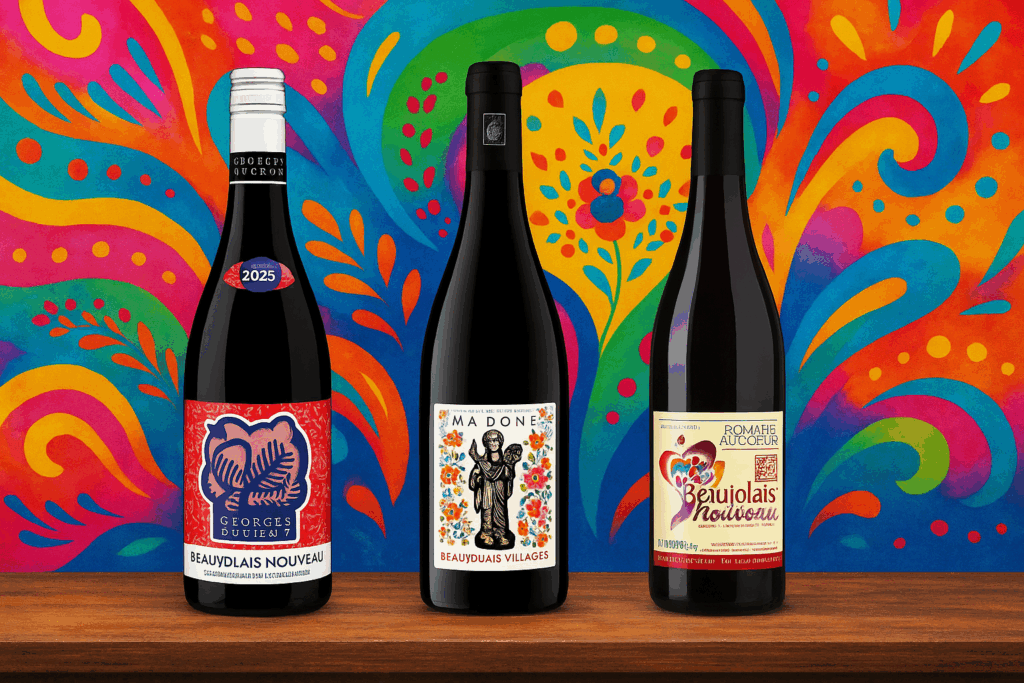
The industry didn’t give up. Around 2010, Inter Beaujolais launched a campaign to reinvent Nouveau — cutting production and improving quality. Producers harvested later for riper fruit and abandoned the artificial banana-flavour yeasts of the 1990s. By the late 2010s, the wines were fresher, more natural, and more serious. The rebrand, “Nouveau by Beaujolais”, came with modern packaging and colourful designs by young artists.
Beaujolais Now:
After years of mockery, Beaujolais Nouveau is back — smaller, better, and more self-aware. Today’s focus is on purity of fruit, organic methods, and genuine freshness rather than flash. Nostalgic yet modern, it’s winning over a new generation who see it as fun again. Lighter, juicier reds are back in fashion, giving Nouveau’s easygoing style fresh relevance.
Beaujolais Nouveau may never return to its 1980s frenzy, but it has found something more enduring: balance. The excesses are gone, the quality is up, and the wine has rediscovered its purpose — to be, as critic Robert Parker once said, “delicious, zesty, exuberant… vibrantly fruity.”
In France, Beaujolais Nouveau remains a beloved tradition, though more for its festivity than prestige. Marketing now emphasises conviviality and heritage, with images of friends toasting in countryside gatherings. In Japan, the market remains devoted — Nouveau has become a seasonal ritual, its charm tied to autumn’s arrival. And in the UK, from Swansea’s Beaujolais Day to London’s natural wine bars, it’s being rediscovered with fresh enthusiasm.
Ultimately, Beaujolais Nouveau’s enduring success lies not in grandeur but in joy — its ability to bring people together, raise a glass to the new harvest, and remind the world that wine, at its heart, is meant to be shared.
Have a question about Beaujolais Nouveau?
Curious about how it’s made, when to drink it, or which bottle to try next? Drop your question in the comments below — our wine expert will be happy to help. When it comes to wine, no question is too small (or too nerdy).