

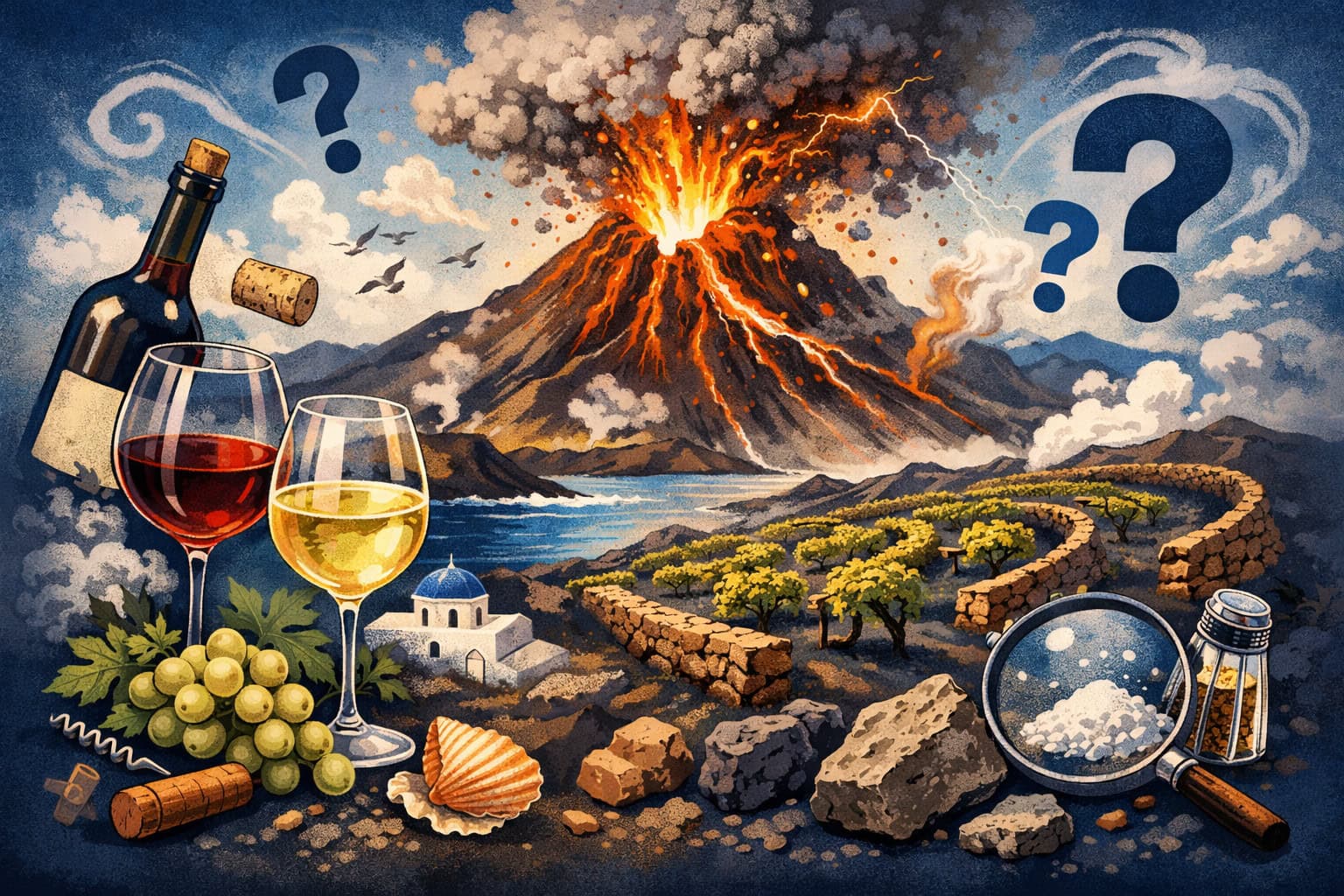
Volcanic wine sounds dramatic. Fire, ash, molten rock.
But what does it actually mean? And more importantly — can you really taste a volcano in your glass?
Let’s strip away the marketing smoke and look at the geology, the chemistry, the vineyard reality and the market momentum behind one of wine’s most talked-about categories.
What Is a “Volcanic Wine”?
Short answer: there is no universal legal definition.
In everyday wine language, a volcanic wine is one made from grapes grown on soils derived from volcanic parent material — lava flows, basalt, ash, pumice, tuff or other erupted fragments.
But that’s already more complicated than it sounds.
Volcanic soils range from:
- Young, black basalt gravels
- Porous pumice and ash deposits
- Hardened lava flows
- Highly weathered volcanic clays formed thousands of years ago
- Mixed soils where volcanic material sits alongside limestone, sand or alluvium
So “volcanic” is about geological origin, not a single soil type or flavour guarantee.
Some industry groups have tried to formalise it. One example is the Volcanic Origin guarantee mark run by an association of producers. It sets criteria such as geological verification and a minimum percentage of grapes grown on certified volcanic plots.
But this is voluntary. It sits alongside existing appellation systems rather than replacing them.
In most countries, “volcanic” is a descriptive claim — not a protected category like Champagne.
The Science: How Volcanic Geology Actually Influences Wine
Here’s the key idea:
Rocks don’t dissolve into your wine glass and turn into flavour.
The pathway is indirect.
Geology → soil structure → vine growth → grape composition → winemaking choices → final wine style
Volcanic terrains often share certain physical traits:
- Stony, shallow soils
- Strong drainage
- High porosity
- Low organic matter
- Steep slopes
- Significant diurnal temperature swings (especially at altitude)
That combination frequently leads to:
- Lower vine vigour
- Smaller berries
- Higher acidity retention
- Tighter phenolic structure
- Lower yields
From there, winemaking decisions amplify or soften these traits. Stainless steel, concrete, neutral oak and extended lees ageing are common tools in many volcanic regions because they preserve tension and aromatics rather than mask them.
In other words, it’s not “basalt tastes like X.”
It’s “basalt soils change how the vine behaves.”
The Minerality Debate: Myth vs Chemistry
Minerality is the promise. Minerality is also the controversy.
People describe volcanic wines as:
- Flinty
- Stony
- Smoky
- Saline
- Chalky
- Earthy
But here’s what research consistently shows:
You are not tasting dissolved rock.
Geological minerals are largely flavourless and present in wine only in trace ionic form. The idea that “you can taste basalt” is chemically simplistic.
So what are we tasting?
1. High Acidity and Low pH
Sharp, bright acidity creates a sensation of tension that tasters often call “mineral.”
2. Sulfur Compounds
Compounds such as certain thiols can produce struck-match or flinty aromas. These are fermentation and ageing effects, not rock dust in your glass.
3. Salinity and Ionic Balance
In coastal volcanic areas, sea spray can influence vine ion uptake. This can subtly affect perception of saltiness — though detection thresholds are complex and context-dependent.
4. Style Choices
Lower fruit sweetness.
Restrained oak.
Phenolic grip.
Extended lees contact.
All of these can enhance a perception of structure and dryness that people label “mineral.”
Minerality, then, is a sensory shorthand. It’s real as a perception. But its causes are layered and indirect.
Iconic Volcanic Wine Regions
Volcanic Wines from Etna, Sicily, Italy
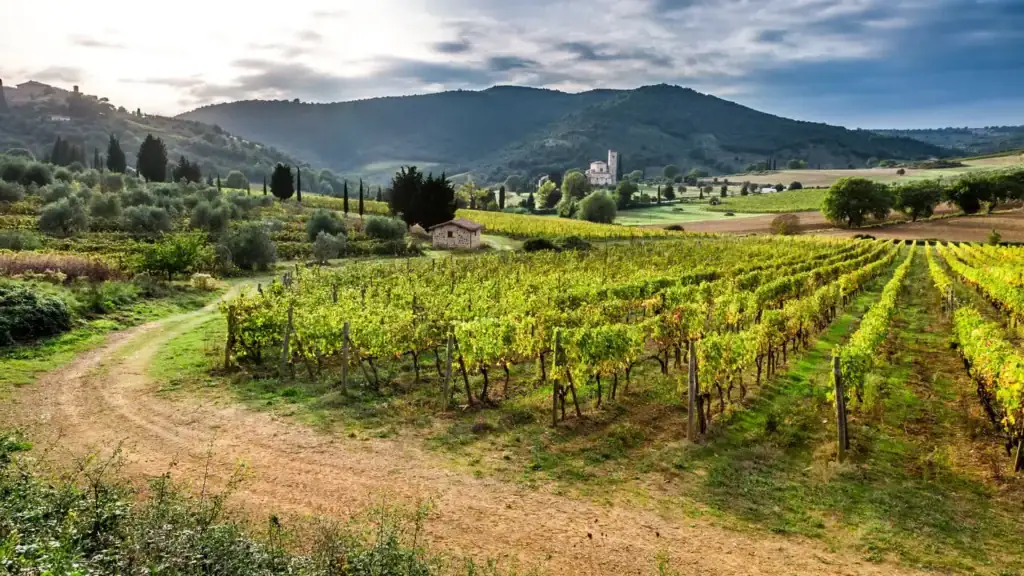
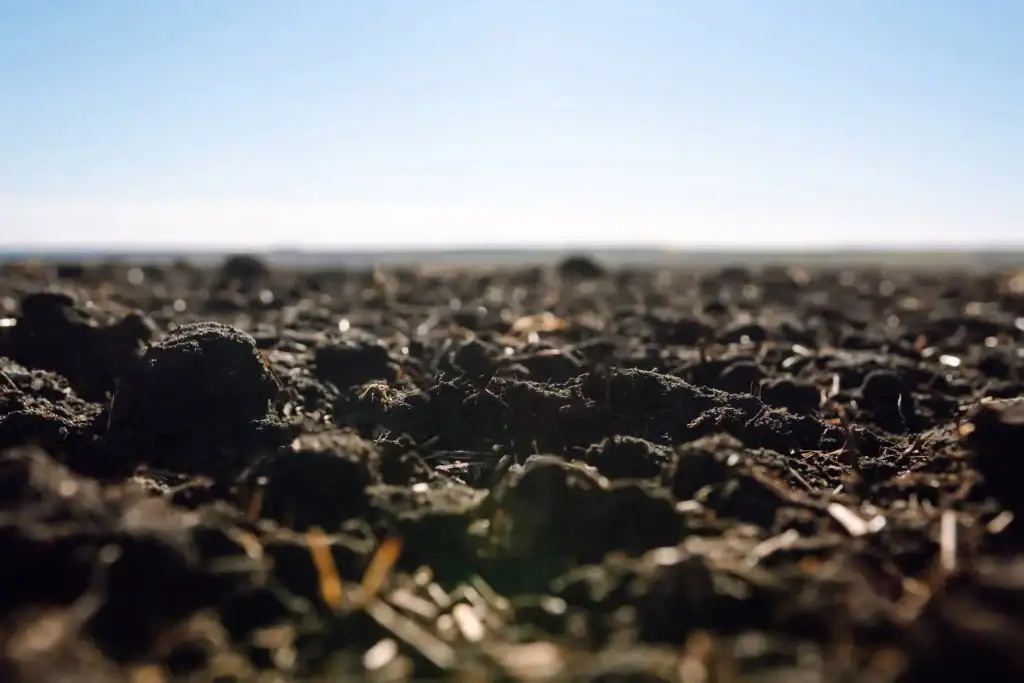
High altitude vineyards. Black lava sands. Dramatic diurnal shifts.
Key grapes: Nerello Mascalese (reds), Carricante (whites)
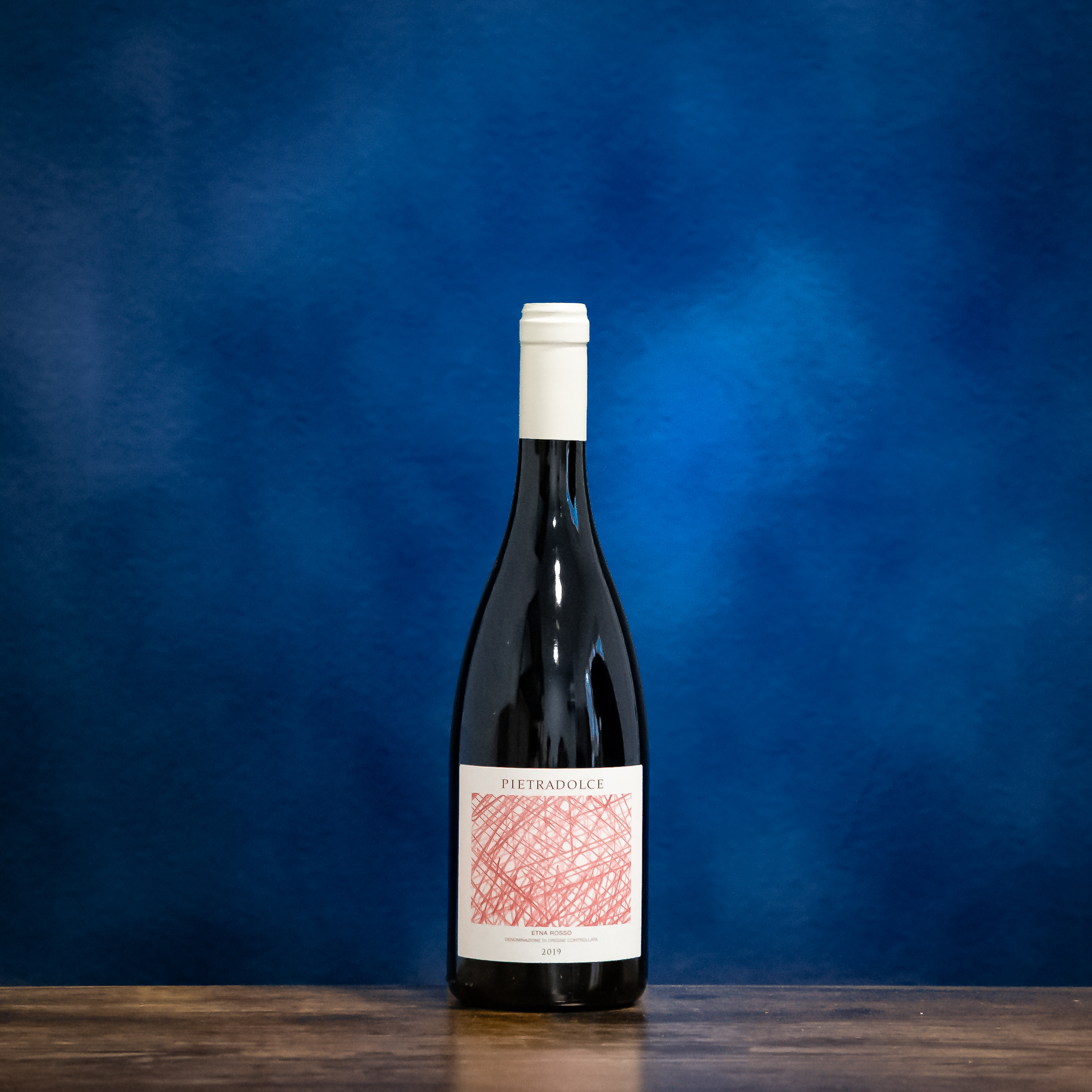
Etna produces around six million bottles annually, with strong export markets. Wines are typically pale yet structured, with red fruit, lifted acidity and that saline, smoky framing people love to call “volcanic.”
Etna has gone from niche curiosity to serious fine-wine player in under two decades.
Volcanic Wines from Lanzarote, Canary Islands, Spain

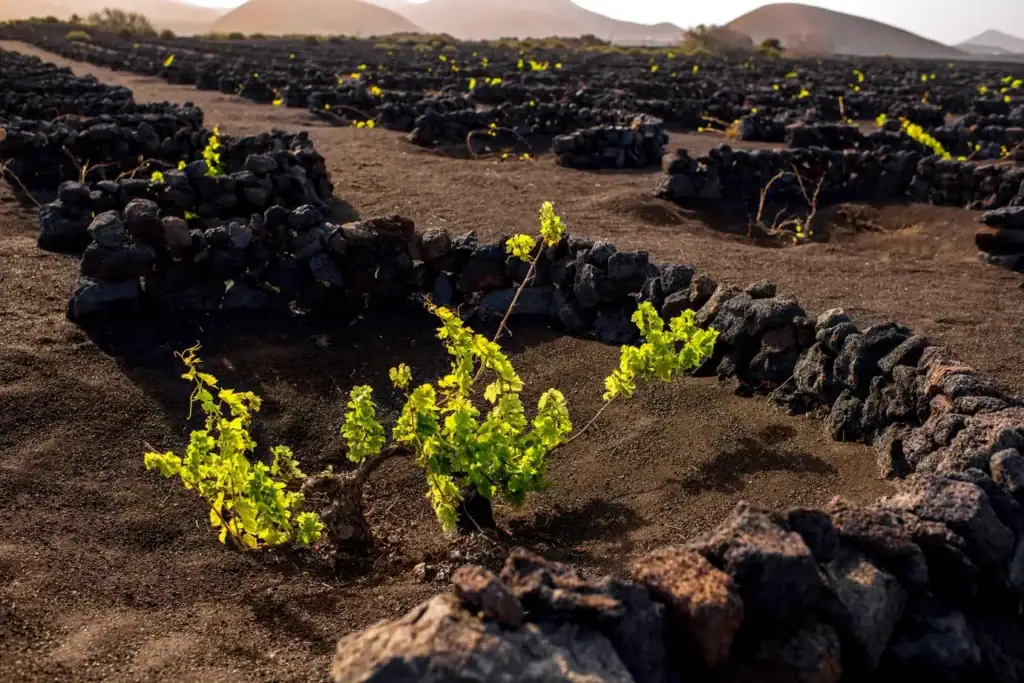
Vines grow in craters dug into black volcanic ash, protected by semicircular stone walls.
Key grape: Malvasía Volcánica
The landscape looks lunar. The wines are often aromatic, textured and surprisingly fresh given the island’s arid climate.
Volcanic Wines from Santorini, Cyclades, Greece
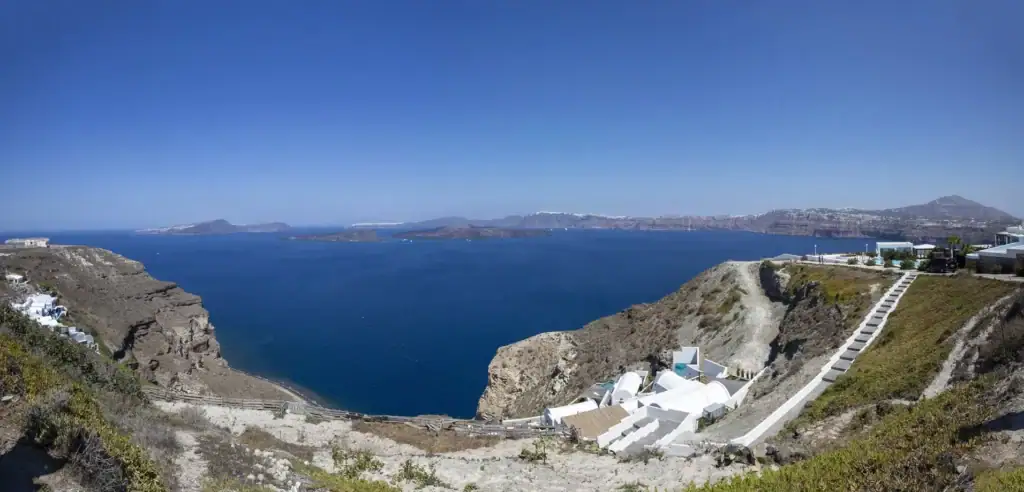
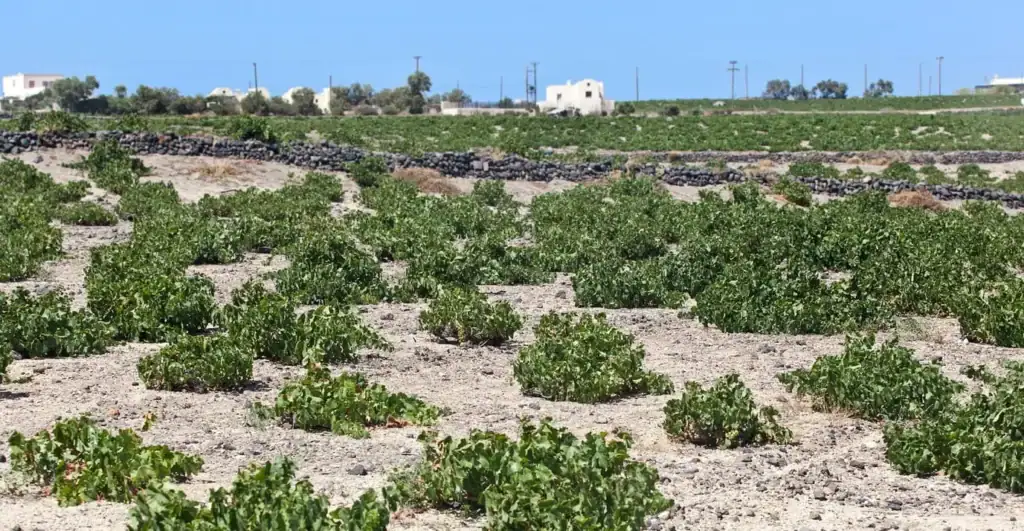
Extreme viticulture.
Vines are trained into basket shapes (kouloura) to protect from fierce winds. Rainfall is minimal. Soils are pumice, ash and lava fragments.
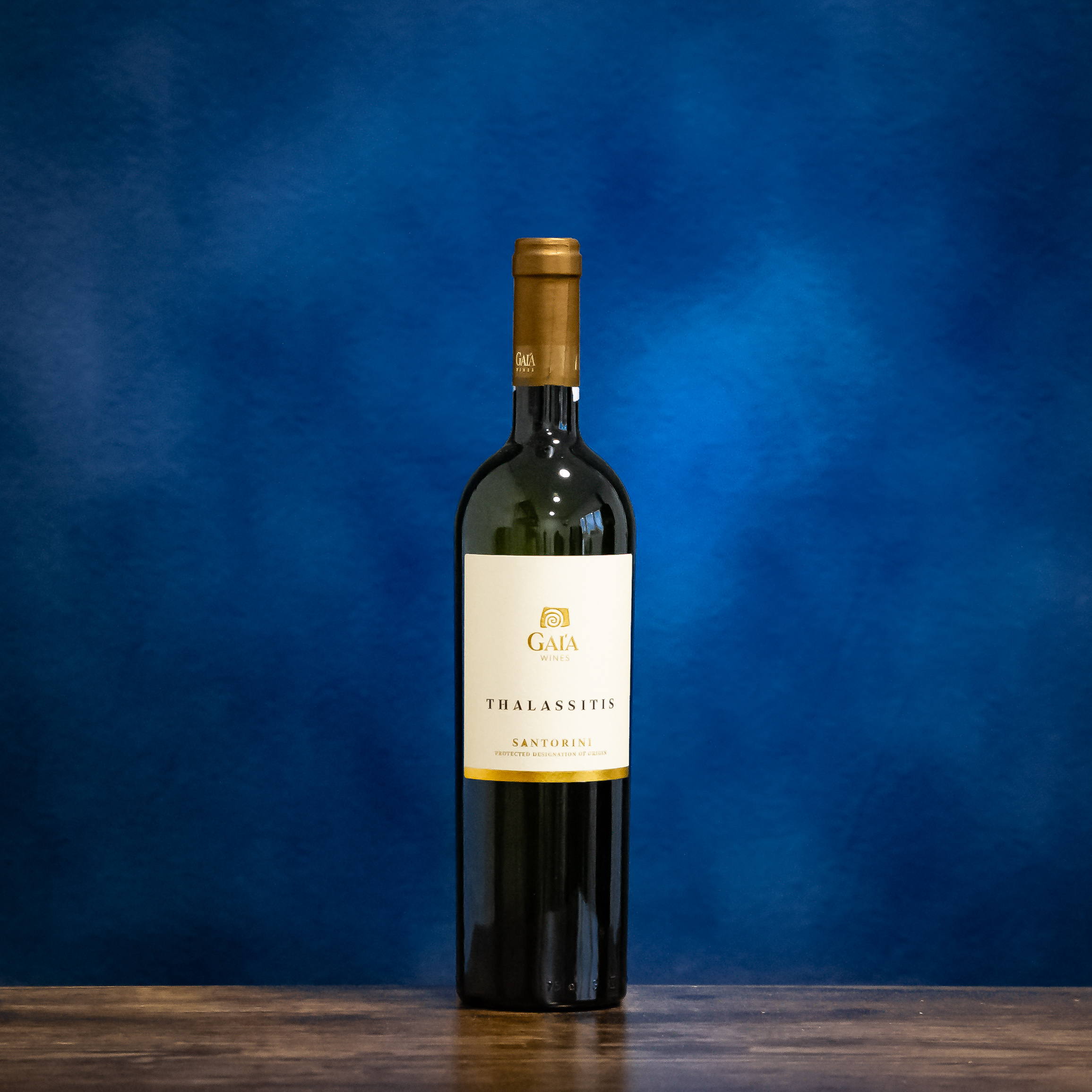
Key grape: Assyrtiko
The wines are intensely acidic, often described as saline and electric.
But here’s the twist: Santorini also faces dramatic harvest reductions and rising grape prices. Scarcity has pushed pricing firmly into premium territory.
This is volcanic wine under climate pressure.
Volcanic Wines from Tokaj, Tokaj-Hegyalja, Hungary
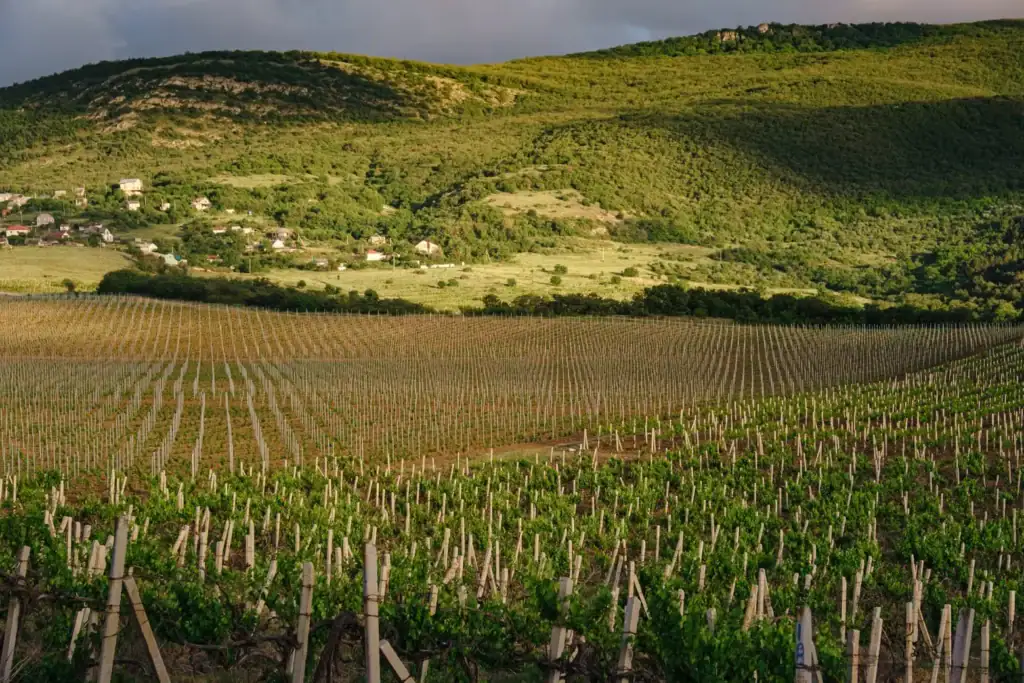

Miocene volcanic activity shaped these hills.
Key grapes: Furmint, Hárslevelű
Tokaj proves volcanic doesn’t mean just crisp whites. It spans razor-sharp dry wines and legendary sweet Aszú wines.
Volcanic Wines from Howell Mountain AVA, Napa Valley, USA
When people say “volcanic wine”, they often picture salty whites and flinty freshness. Napa is the reminder that volcanic terroir can also mean structure and density.
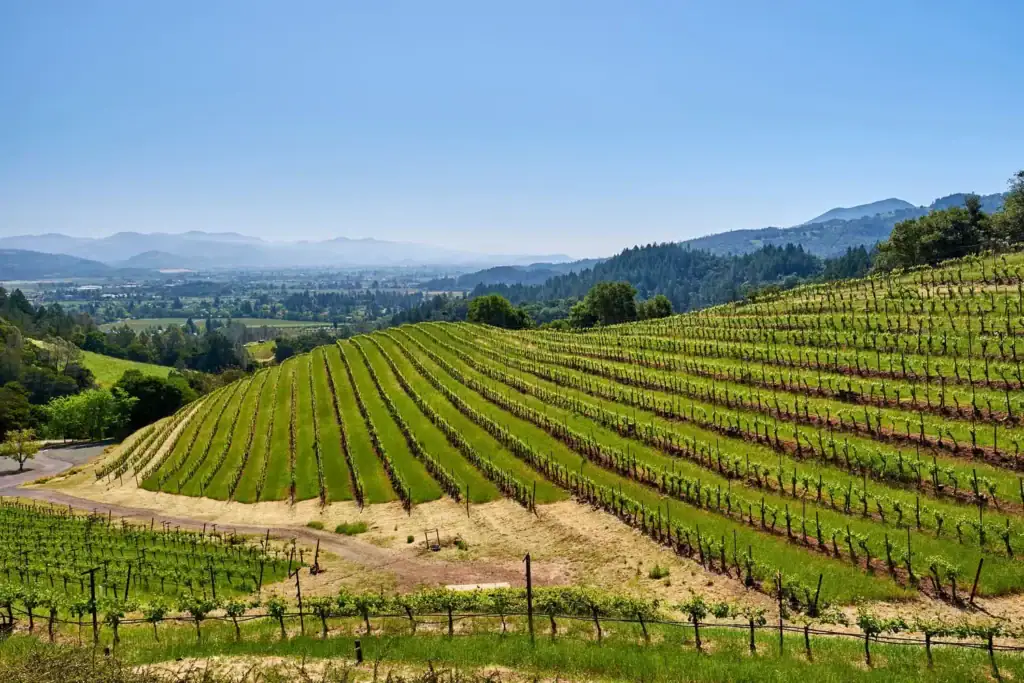

Mountain AVA. Shallow volcanic soils. High drainage. Low fertility.
Key grape: Cabernet Sauvignon
Here volcanic doesn’t mean saline tension — it means structure, density and mountain power.
Volcanic terroir is not a single flavour profile.
Soave Volcanic Wines: volcanic soils that sharpen, not shout
Soave is one of the best examples of volcanic influence feeling precise rather than dramatic. In the Classico zone, many of the key hills have volcanic tuff and basalt, and producers often lean into a style that keeps the wine tight, clean, and mineral-coded.
The grape is Garganega, and at its best it gives you restrained citrus, white blossom, almond, and a faint herbal note. Volcanic sites here often show up as a kind of quiet tension, plus that slightly stony, dry grip that makes you want another sip. The textbook perfect example is Pieropan Soave Classico.
Winemaking matters a lot in Soave. Plenty of top producers use stainless or concrete and extended lees ageing to build texture without turning the wine “oaky”.
Tenerife: Atlantic volcanic whites with a salty accent
Tenerife is volcanic wine with an Atlantic accent. You’ve got altitude, wind, strong sun, and vineyards that can sit on black basalt soils or volcanic ash, sometimes with dramatic day to night temperature shifts depending on the site.
The varieties are a big part of the identity here. Look out for Listán Blanco (often lean, citrusy, slightly herbal), plus a long list of local grapes you won’t see elsewhere. Many wines feel bright and dry, with a subtle salty or smoky edge that reads “volcanic” without needing the label to tell you.
Why Volcanic Wines Became a Thing
In the mid-2010s, sommeliers began grouping volcanic wines together as a thematic list category.
It worked.
Why?
- They are food-friendly.
- They often show high acidity and structure.
- The narrative is powerful. Fire. Ash. Survival.
- Many volcanic vineyards are old, ungrafted or traditionally farmed.
- They differentiate a wine list instantly.
Dedicated awards and certification programs now exist. Trade media covers volcanic tastings as standalone events.
At the same time, the wider wine market is slowing in many mature economies. Volcanic wines function as a premium niche within a tougher landscape.
Storytelling matters.
The Risks and Controversies
- Minerality Over-Claiming
Saying “you can taste lava” is catchy. It’s also misleading. - Volcanic-Washing
Without strict definitions, almost any wine with a bit of basalt nearby could claim volcanic identity. - Climate Fragility
Islands like Santorini show how vulnerable these regions are to drought and tourism pressure. - Phylloxera Myths
Some volcanic islands historically avoided phylloxera, allowing ungrafted vines. But this is not universally guaranteed forever.
How to Taste Volcanic Wines Properly
If you want to avoid the volcano placebo effect:
- Compare same grape, different geology.
- Keep winemaking style similar.
- Focus on acidity, phenolic tension and salt perception.
- Ask whether the “flint” note could be sulfur chemistry.
Treat “volcanic” as a hypothesis, not a conclusion.
Are Volcanic Wines Better?
No.
But they are often distinctive.
And distinctiveness is powerful in a crowded market.
Volcanic wine is less about molten rock in your mouth and more about:
- Water stress timing
- Nutrient availability
- Diurnal shifts
- Viticultural difficulty
- Conscious winemaking restraint
It’s geology shaping decisions.
The Big Picture
Volcanic soils cover only a tiny fraction of the planet’s surface. Yet they host an outsized number of characterful wine regions.
That’s partly because volcanic landscapes are hard to industrialise. They preserve old vines, local varieties and stubborn traditions.
They also create striking wines that sommeliers love to talk about.
But if there’s one takeaway:
You are not tasting lava.
You are tasting vine physiology, climate, and human choice filtered through volcanic ground.
That’s more interesting anyway.
Over to You
Have you tried wines from Etna, Santorini or Lanzarote?
Do you genuinely taste “minerality” — or do you think it’s mostly a storytelling device?
And here’s a bigger question:
If someone poured you a volcanic wine blind, would you recognise it?
Drop your thoughts in the comments.
No question is too geeky, too sceptical, or too obsessed with salt levels.
Let’s see how much of the volcano survives a blind tasting.
Have a Question About Volcanic Wines?
If you have questions about geology, acidity, vineyard practices or specific regions like Etna or Santorini, leave a comment below. Wine is complex, and the best discussions start with good questions.



Great piece. Really informative. These areas are going to be really hit by climate change in the future – interesting that places like Santorini are unlikely to be able sustain wines due to water issues.
I am sure the wines we drink now are likely to be significantly different in the near future – irrigation is going to be a major issue in many wine regions. I see LaFleur has dropped its AC and is now a vin de France based on irrigation.
in guess the question is :
– With good wine making will wine get better and how will it change (grape/style/region?)
Absolutely. Although I think there’s also a danger of overstating the idea that warmer automatically means worse.
There are already successful wine regions operating in much hotter conditions than most of Europe, particularly in places like Australia, so European vineyards still have quite a lot of room to adapt. The Douro is another fascinating example. It is already an extremely hot, dry region, yet some exceptional wines are being produced there.
Wine style has never really stood still either. What we consider ‘classic’ today is often very different from what the same region was producing 50 or 100 years ago, and in many cases changes in viticulture and winemaking have actually improved quality.
There are also huge amounts of work going into adaptation in the vineyard: different varieties and clones, changing planting sites and altitude, canopy management, soil management, picking dates, irrigation and increasingly sophisticated technology. All of that gives producers tools to offset at least some of the effects of a warming climate.
So I’m not convinced the future is necessarily worse wine. We’ll almost certainly see styles change, some regions and grape varieties gain while others struggle, and the map of wine may shift. But good growers and winemakers have always adapted.
Perhaps the more interesting question is not whether we’ll still be able to make great wine, but how different that great wine will be from what we drink today!