
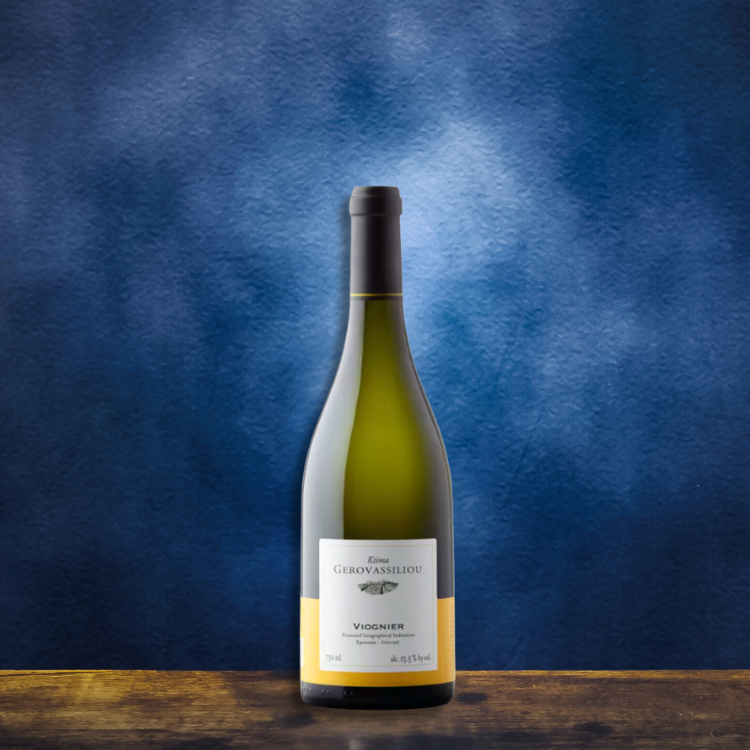
Gerovassiliou Viognier is a wonderfully expressive example of how successfully this famously aromatic Rhône grape has adapted to northern Greece. Ripe apricot, peach and pear immediately give the wine its generous personality, joined by jasmine, white flowers and more subtle exotic-fruit notes. There is richness here, but it is carefully controlled: bright acidity keeps the palate fresh while fermentation and maturation in French oak add creaminess, spice and a gentle smoky character rather than obvious woodiness. The result is broad, perfumed and luxurious without becoming heavy. It is particularly appealing for anyone who enjoys richer white wines but still wants freshness and definition, and it works beautifully with seafood, creamy dishes and aromatic Asian flavours. The estate itself describes apricot, peach and a long smoky finish as the defining characteristics of the wine.
Gerovassiliou Viognier, Producer
Ktima Gerovassiliou was created by Vangelis Gerovassiliou in 1981, when he began restoring his family vineyard in Epanomi, around 25 kilometres southeast of Thessaloniki. Starting with just 2.5 hectares, he planted both native Greek grapes and selected international varieties, with the first estate wines produced in 1986.
Vangelis had previously studied oenology in Bordeaux and worked alongside the influential Professor Émile Peynaud before spending more than two decades as an oenologist at Domaine Porto Carras. It was there that he played a crucial role in rescuing the nearly forgotten Greek grape Malagousia and bringing it back into commercial production. Today, the second generation of the Gerovassiliou family is also involved in the estate.
Although the estate is understandably celebrated for its work with indigenous Greek grapes, Gerovassiliou has also demonstrated how successfully international varieties can perform in the distinctive maritime environment of Epanomi. Viognier has become one of the clearest examples.
Gerovassiliou Viognier, Terroir & Winemaking
The estate is a single 110-hectare vineyard in Epanomi, surrounded by sea on three sides and only around four kilometres from the coast. The climate is Mediterranean, with warm summers and mild winters moderated by regular maritime breezes. Soils are predominantly sandy, with clay components, calcareous rock and ancient marine fossils reflecting the area’s geological history.
Viognier was first planted here in 1993 in collaboration with the Agriculture School of Aristotle University of Thessaloniki, making it a comparatively recent addition to the estate.
After harvest, the grapes undergo a period of cold skin contact to extract additional aroma and flavour. The juice is then fermented in French oak barrels before remaining on its lees for several months. Lees ageing builds the notably creamy, full mouthfeel, while the barrel fermentation contributes subtle smoke and spice. Importantly, the wine retains sufficient freshness to balance the natural richness of Viognier.
Gerovassiliou Viognier, Tasting Notes
Deep lemon-gold in colour, immediately hinting at the richness to come. The nose is highly aromatic, opening with ripe apricot, peach and pear, followed by jasmine, white blossom and touches of pineapple and exotic fruit.
The palate is broad and creamy, with generous stone-fruit flavours supported by fresh acidity. Ripe peach and apricot are joined by pear, subtle citrus and gentle spice, while barrel fermentation introduces a fine smoky character and restrained oak complexity.
Despite its richness, the wine remains balanced rather than heavy. The finish is long and aromatic, leaving lingering notes of peach, flowers, spice and subtle smoke. Gerovassiliou specifically highlights apricot, peach and smoky accents in the finish, while current UK releases also show jasmine and ripe pear among the wine’s characteristic aromas.
Gerovassiliou Viognier, Food pairing suggestion: Lobster tail with a citrus-ginger butter sauce.

Reviews
There are no reviews yet